
Last updated November 15, 2026
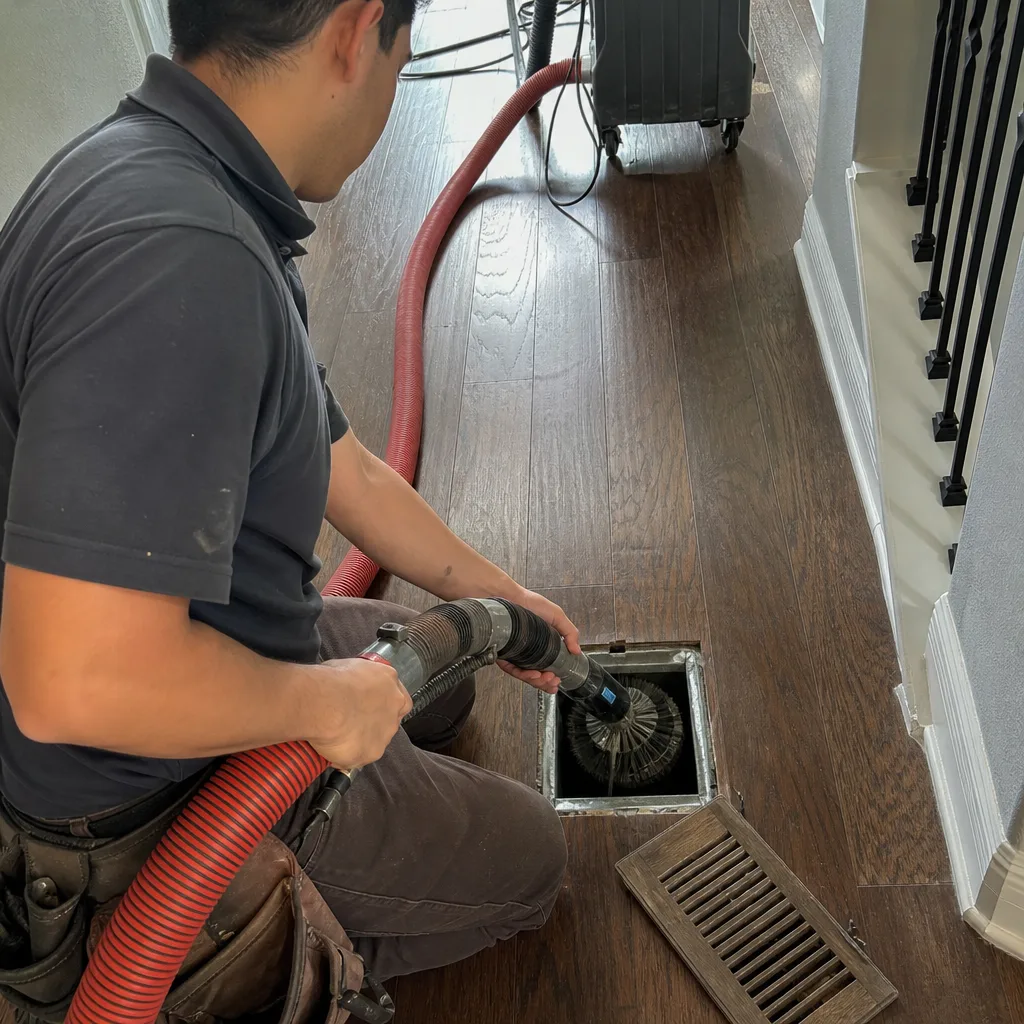
 Whole-home duct cleaning
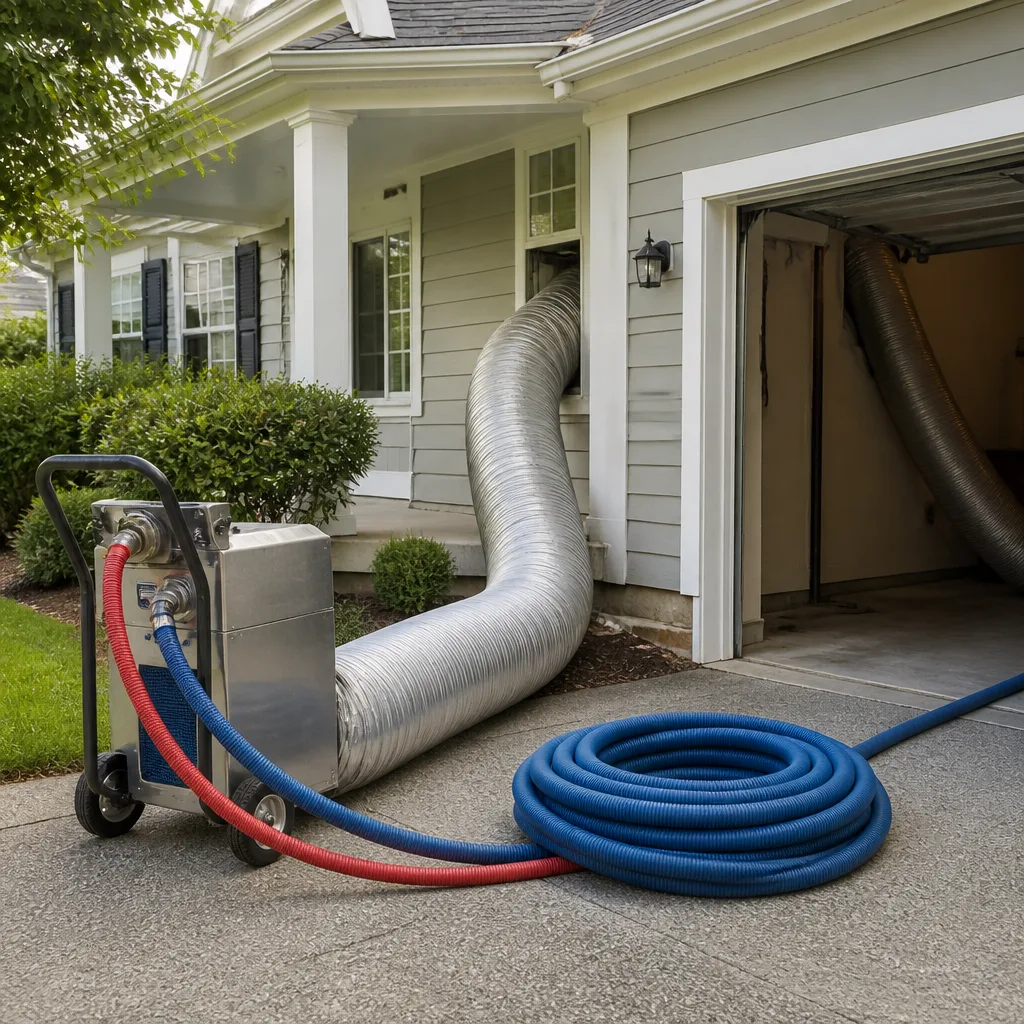
 Dryer vent cleaning
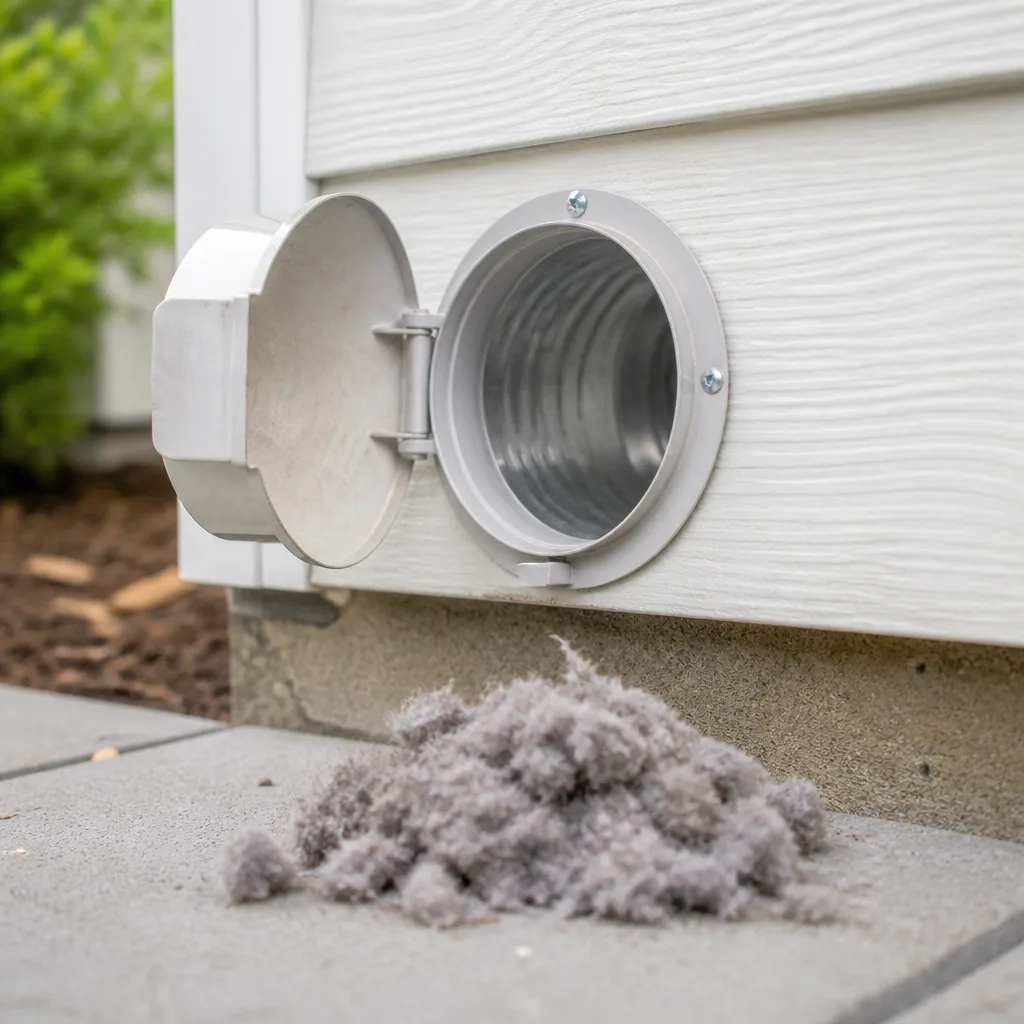
 Camera inspection
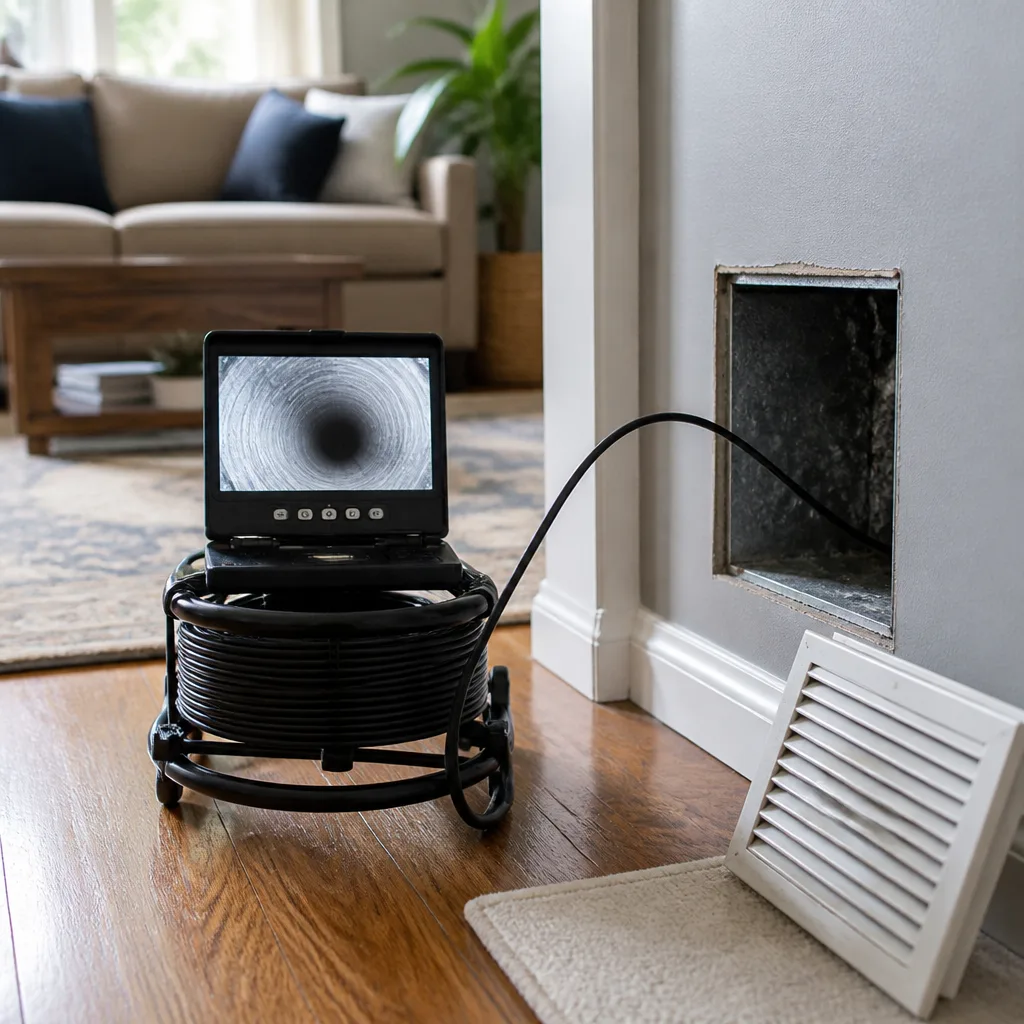
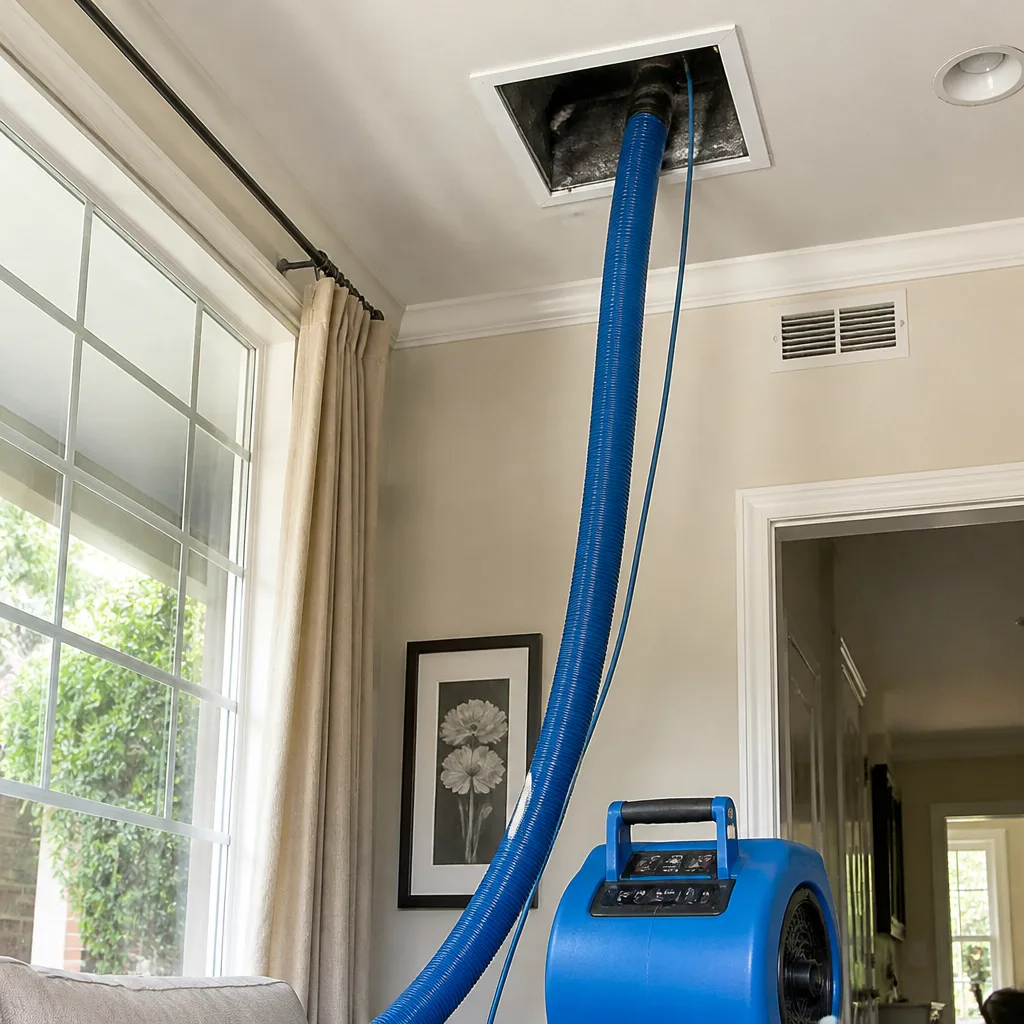 Sanitizing & deodorizing
Whole-system duct and dryer vent check with before-and-after photos - you see exactly what came out of your vents
That "$99 whole-house special" is a bait ad - the real number appears once they are in your hallway, or the "clean" is a shop-vac at the register. We photograph the inside of your ducts before and after instead.
How to Hire an Air Duct Cleaning Contractor in Garland: A Step-by-Step Guide
If a contractor can’t tell you the CFM rating of their vacuum collection unit on the spot, that’s your answer. Legitimate operators know their equipment specs the way a mechanic knows engine displacement, and the ones who stammer through that question are usually the same ones who arrive with a shop vac and a coupon. Most hiring advice tells you to check reviews and verify insurance, which is fine as far as it goes, but it doesn’t screen out the operators running undersized equipment and per-vent pricing. This guide gives you the technical questions and contract red flags that do. You’ll learn what to ask before booking, how to read a quote in Garland, and what a real job actually looks like.
Quick Answer
To hire an air duct cleaning contractor in Garland, ask five equipment questions before you book: the CFM rating of the collection unit, the agitation method, whether HEPA filtration is certified on the vacuum, how they verify negative pressure during service, and whether they can show you camera footage of your ducts before and after. Then demand a flat per-job price in writing, not a per-vent rate. A contractor who can’t answer the equipment questions or who quotes per vent is telling you what the job will look like.
Styles & brands we work with
- Whole-home duct cleaning
- Dryer vent cleaning
- Camera inspection
- Sanitizing & deodorizing
Table of Contents
- Why the Garland Duct Cleaning Market Is Tricky to Navigate
- The Five Equipment Questions to Ask Before You Book
- How to Read a Duct Cleaning Quote in Garland
- Per-Vent Pricing Versus Per-Job Pricing: The Real Difference
- Red-Flag Contract Language to Watch For
- What NADCA ACT Membership Actually Requires
- How to Compare Quotes Apples-to-Apples
- Permits, Liability, and Mold Scope in Garland
Why the Garland Duct Cleaning Market Is Tricky to Navigate
Garland sits in a part of the DFW metroplex where the housing stock is genuinely mixed. You have mid-century homes in neighborhoods like Ridgewood Park and Cresthaven, homes built during the 1980s boom around Club Hill, and newer construction out toward Firewheel. Each era of construction used different duct materials and different routing conventions, and that matters when you’re hiring. A contractor who only works on newer flexible-duct systems will struggle with the rigid metal trunk-and-branch layouts common in older Garland homes.
The other variable is the climate. North Texas summers push HVAC systems hard for months, which means ducts spend a lot of time cycling large volumes of air through the same passageways. That cycling doesn’t just move conditioned air; it moves dust, and over years that dust settles and compacts along the duct walls. When a system like that gets agitated by a contractor with insufficient suction, the debris doesn’t leave the house. It redistributes into the living space. That’s the practical reason equipment matters here more than it might in a milder climate.
And then there’s the coupon economy. DFW is full of operators who advertise a low teaser rate, arrive with residential-grade vacuums, and then upsell sanitizer sprays, “sealant applications,” and per-vent charges that turn a $99 headline into a four-figure invoice. The homeowners who get burned aren’t careless. They just didn’t know what questions to ask. That’s what this guide fixes. Our technicians have up to 13 years of experience, and the questions below are the same ones we’d want a homeowner to ask us. For broader context on the service itself, our air duct cleaning page walks through what a full-system job involves.
The Five Equipment Questions to Ask Before You Book
These five questions screen out most of the operators you don’t want in your home. Ask them on the phone before anyone comes out. A professional will answer them without hesitation.
- What’s the CFM rating of your vacuum collection unit? CFM stands for cubic feet per minute, and it’s the measure of how much air the vacuum can move. A legitimate duct cleaning vacuum is not a wet/dry shop vac. It’s a truck-mounted or portable high-volume unit rated far above what a consumer machine can manage. If the operator can’t give you a number, they either don’t know or don’t want you to know.
- What’s your agitation method? Agitation is what loosens debris from the duct walls. The two main approaches are compressed air (also called air whips or air blowout) and mechanical brush contact. Air alone can dislodge debris, but it can also leave material clinging to the walls and push it toward the registers. Rotobrush brush-system cleaning is the industry-standard mechanical method, because the brush physically contacts the duct wall while the vacuum extracts what’s loosened.
- Is your vacuum HEPA-filtered and certified as such? HEPA filtration on the collection unit traps fine particulate so it doesn’t exhaust back into the home. Ask what filter class is used and whether it’s part of the standard setup or an upgrade. If HEPA is an “add-on,” that tells you what the base service is doing with the air.
- How do you verify negative pressure during the job? Negative pressure containment means the working area is held at slightly lower pressure than the rest of the home, so dislodged contaminants flow toward the collection equipment rather than into your living spaces. Ask how they set it up and how they confirm it’s holding. Abatement Technologies containment systems are one example of professional-grade equipment used for this purpose. An operator who doesn’t recognize the term is an operator who doesn’t run containment.
- Can you show me camera footage of my ducts before and after? A camera inspection lets you see the condition of the duct interior and verify the work was actually done. Ask whether the before-and-after footage is part of the standard service or available on request. A contractor who can’t produce interior visual evidence is asking you to take the job on faith.
Those five questions take about three minutes on the phone. They’ll eliminate most of the operators you’d otherwise waste a morning on.
How to Read a Duct Cleaning Quote in Garland
A duct cleaning quote should be a single flat price for the whole system, agreed before any work starts, with the scope written down. Anything else is a starting point for negotiation after the technician is already in your home, and that’s where the industry’s bait-and-switch reputation comes from. Here’s what a clean quote looks like line by line.
- System scope: What’s included. Number of supply and return runs, main trunk lines, and whether the air handler and coil are part of the scope. If the coil isn’t mentioned, ask whether it’s separate.
- Price structure: A single total for the system, not a per-vent rate. If it’s per vent, you don’t know what you’re paying until someone counts.
- Equipment description: Brand names and method. Rotobrush, Nikro, Abatement Technologies, or similar professional-grade equipment should be named. “State-of-the-art equipment” is not a description.
- Before-and-after documentation: Photos or camera footage of the interior of your ducts, provided to you after the job.
- Anything conditional: If the price changes based on what’s found, that should be written down with a cap or a defined scope, so you’re not learning the final number on the invoice.
Estimates should be free, and the written estimate should set the final price. If a contractor won’t put a number in writing before the day of service, that’s a signal. For a closer look at what the service covers, our main Duct Cleaning Garland page lays out the three services we offer: air duct cleaning, dryer vent cleaning, and air duct repair.
Per-Vent Pricing Versus Per-Job Pricing: The Real Difference
Per-vent pricing sounds fair, because you’re paying for what you have. In practice, it creates a structural incentive to move fast and count high. A technician paid or measured per vent has a reason to spend less time on each run, because the next vent is where the money is. A per-job price aligns the contractor’s interest with thoroughness: the faster they move, the less they make, so the incentive is to do it right and move on.
There’s also the counting problem. What counts as a vent? Does a floor register over a shared trunk line count separately from the trunk? Does the return air grille count? Contractors using per-vent pricing often define these terms differently quote to quote, which makes comparisons nearly impossible.
Then there’s the actual physics. A duct system is a network. Debris doesn’t stay neatly within the boundary of one run. It accumulates along the trunk, at transitions, and at the joints where branches meet the main. A thorough cleaning addresses the whole system as a unit, which is why we quote one flat price per system. You know the number before we start, and it doesn’t change because the technician found more vents than expected. That’s the whole point.
If a Garland contractor quotes per vent, ask what happens to the trunk lines and the air handler. Ask whether their price covers the whole system or only the runs they count. Ask what the final invoice looks like if they find a disconnected run. The answers will tell you plenty.
Red-Flag Contract Language to Watch For
Read the quote and the service agreement carefully. The language that causes trouble later is usually small and buried. These are the patterns worth walking away from.
- “Per-vent” pricing with no total. Already covered, but it bears repeating because it’s the most common setup for a final invoice that dwarfs the initial quote.
- Vague “sanitizer application” or “antimicrobial fogging” add-ons. If a contractor offers to spray something into your ducts, ask for the product name, the EPA registration number, and the Safety Data Sheet. A legitimate application has documentation. “Sanitizer” as a generic upsell with no disclosure is a way to add a line item to the invoice.
- “Free inspection” that becomes a repair quote. Free inspection is fine. But if the inspection consistently finds the same problem at every house, that’s a sales script, not an inspection. Ask for camera footage and photo documentation of any issue they want you to fix.
- Guarantees with no written terms. If a contractor promises satisfaction, the guarantee should be spelled out in the agreement: what’s covered, for how long, and what the remedy is. If it isn’t written down, it isn’t a guarantee.
- Scope that expands on the day of service. Additional work can be legitimate when a camera inspection finds a disconnected duct or a mold issue. But the price for that work should be quoted, documented, and approved by you before anything happens. The invoice shouldn’t arrive with new line items you didn’t agree to.
- “We service all brands” without naming any. Specificity earns trust. If a contractor says they’ll bring a “professional vacuum,” ask what brand and what model. If they can’t name it, they don’t have one worth naming.
None of this is exotic. It’s the same due diligence you’d apply to a roof or an electrical panel. But duct cleaning is a service most homeowners buy once a decade at most, which means the market doesn’t self-correct through repeat business the way other trades do. Read the contract.
What NADCA ACT Membership Actually Requires
NADCA is the National Air Duct Cleaners Association, and its ACT program (Assessment, Cleaning and Restoration) is the industry standard for how duct cleaning should be performed. Membership in NADCA and ACT certification are both worthwhile signals, but the word “member” gets used loosely in marketing, so it’s worth knowing what the designations actually mean.
Being a NADCA member generally requires adherence to the association’s code of ethics and its standard for cleaning and restoration. ACT certification is more specific: it demonstrates that the contractor has been trained in the assessment, cleaning, and restoration process, and understands the standard defined by the association. ACT-certified firms are expected to follow that standard on the job, including inspection, source removal, and verification.
What that means for you as a Garland homeowner is simple: when a contractor says “NADCA certified,” it’s fair to ask what that certification covers. Do they inspect the system before starting? Do they document the before and after condition? Are they following the ACT standard for source removal? Do they offer restoration (duct sealing and repair) when the assessment finds problems? Duct repair is part of the ACT scope, which is why we offer it as a core service. Cleaning without addressing a disconnected or breached run is wasted money. The contaminants just come back.
Ask the question directly. A contractor who takes the standard seriously will be glad to explain it. A contractor using “NADCA” as a buzzword will change the subject.
How to Compare Quotes Apples-to-Apples
Comparing three duct cleaning quotes in Garland is harder than it looks, because contractors structure the price differently. One quotes per vent. One quotes per job. One quotes a low base rate and an “air handler cleaning” line as a mandatory add-on. To actually compare, you need to normalize the quotes against the same scope.
- Write down the scope each contractor proposed. Number of supply and return runs, main trunk, air handler, coil, and any repair or containment scope. Literally write it out side by side.
- Ask each contractor for a total for the same scope. If quote A is per vent and quote B is per job, ask A for the total for your whole system and ask B to itemize the components. You want the same starting point.
- Identify the equipment each will use. Name the brand. If one contractor is bringing a Rotobrush brush system and another is bringing an air whip, you’re not comparing the same service.
- Ask what happens if the job turns up a repair. Disconnected flex duct, breached sealed runs, and mold growth on the interior of a duct are all things a camera inspection can find. Each contractor should tell you how that work gets quoted, approved, and documented.
- Ask for the written estimate in writing, before the day of service. The estimate should set the final price. If the number can’t be pinned down before service, that’s a data point.
That’s more homework than a coupon site asks you to do. It’s also the difference between a service that improves your air and one that generates an invoice. For a broader view of how the process should look when it’s done right, our Garland page covers the local context, and our dryer vent page explains why that service is a fire-safety matter, not a convenience one.
Permits, Liability, and Mold Scope in Garland
Straightforward duct cleaning usually doesn’t require a permit. But once the work crosses into changing the system, the picture changes. If a contractor is going to reconnect, modify, or add ductwork to your HVAC system, most cities require some form of permit, so ask your contractor directly whether the work needs one and who is pulling it. In Garland, the city’s building department is where that question gets answered, and it’s a fair thing to ask before work starts. A contractor who dismisses the question isn’t giving you good counsel.
Mold is the other scope question. If a camera inspection finds mold growth on the interior of a duct or on the air handler, that’s a different category of work. Remediation is not the same as cleaning. Ask what the contractor’s policy is: do they stop and document the finding, refer you to a qualified remediation specialist, or proceed? The answer should be clear and written down. Attempting remediation without proper scope and containment can cause the problem to spread.
Liability is the third piece. Any contractor working in your home should carry general liability insurance and workers’ compensation coverage. Ask for a certificate of insurance before the day of service. It’s a normal request and legitimate contractors expect it. If a contractor won’t provide one, or produces a certificate that names a different company than the one that quoted you, stop. That’s a liability gap you don’t want to own.
The pattern across all three is the same: ask the question before the day of service, get the answer in writing, and don’t proceed on verbal reassurances alone.
Common Mistakes to Avoid
- Booking on price alone. The lowest quote in Garland isn’t necessarily a quote for the same service. It’s often a quote for a faster, less thorough job with the actual scope added to the invoice later. Compare scope, not just the headline number.
- Not asking about the equipment before the technician arrives. Asking about CFM, agitation method, and HEPA filtration on the phone eliminates most bad operators before they book you. Asking after they’re in the driveway doesn’t do much.
- Accepting a per-vent quote without knowing the total. A per-vent rate tells you nothing until someone counts. Ask for a flat per-system price in writing, and if that’s not offered, ask what the total will be.
- Letting “sanitizer application” happen without documentation. If a product is going into your duct system, you should know its name, its EPA registration, and whether it’s appropriate for your situation. Fogging the ducts as a default is not standard duct cleaning.
- Skipping the camera inspection. Before-and-after documentation is the difference between “we cleaned your ducts” and proof that the work happened. If a contractor can’t provide it, you’re buying on faith.
- Ignoring the dryer vent because the ducts look fine. These are separate systems, and dryer vents are one of the leading causes of residential fires. A clean duct system and a lint-clogged dryer vent can coexist. Book them together or ask about both.
- Forgetting to ask about repair scope up front. A contractor who cleans but doesn’t repair will leave a disconnected duct disconnected. Ask whether repair is in scope and what happens if a problem is found.
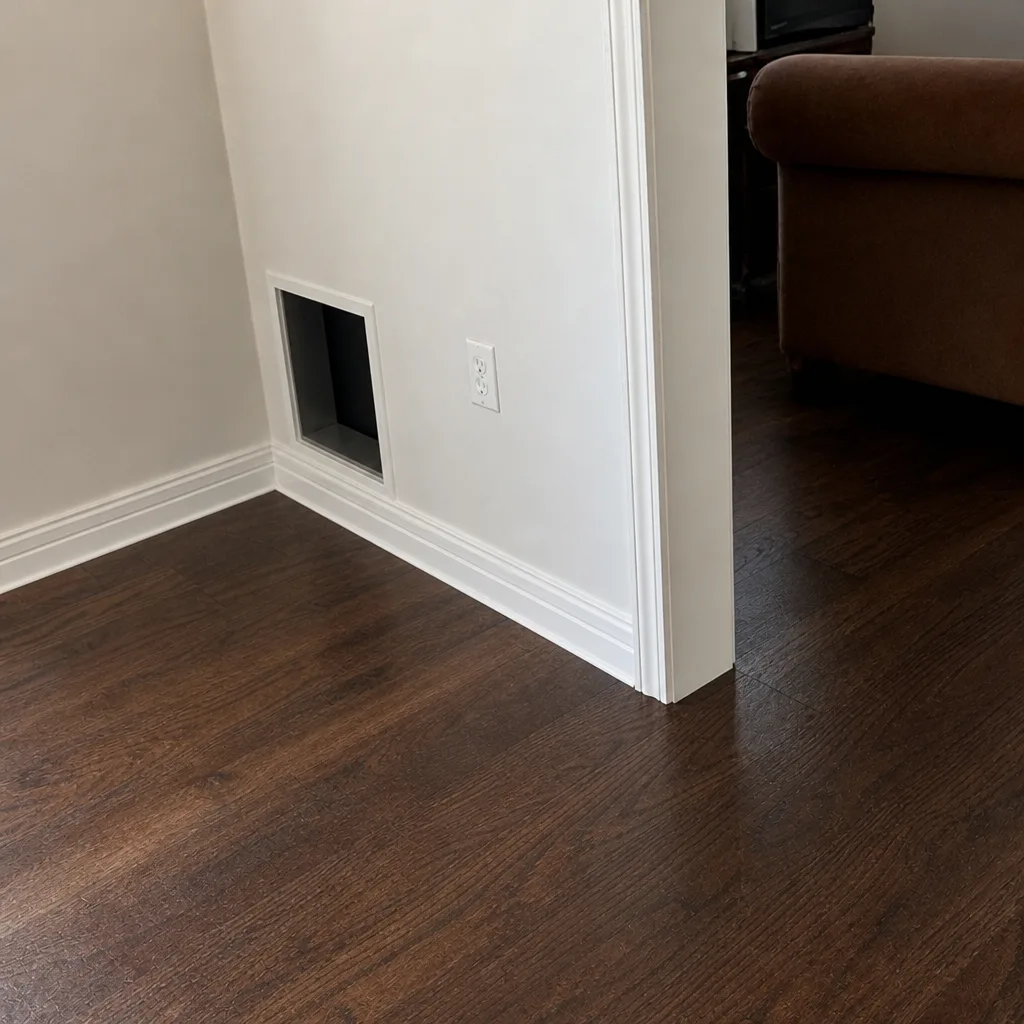
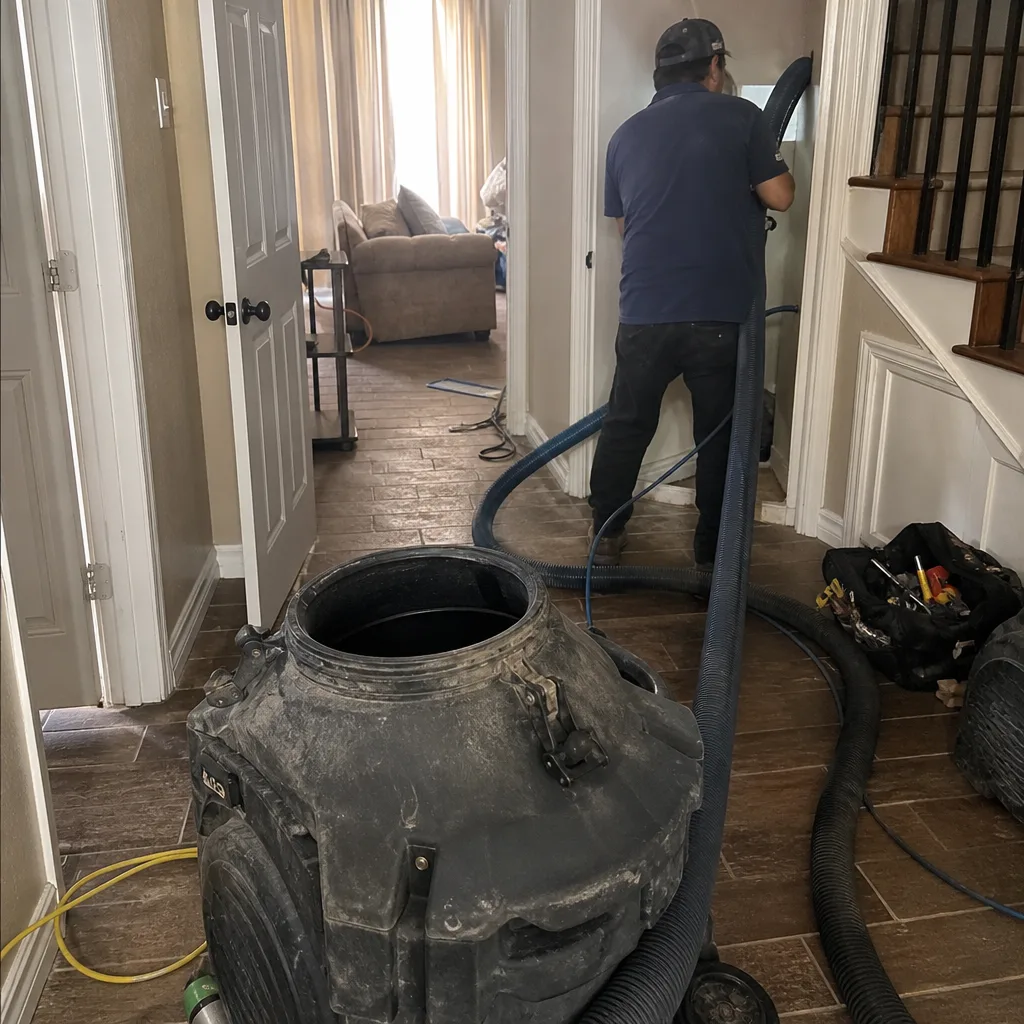
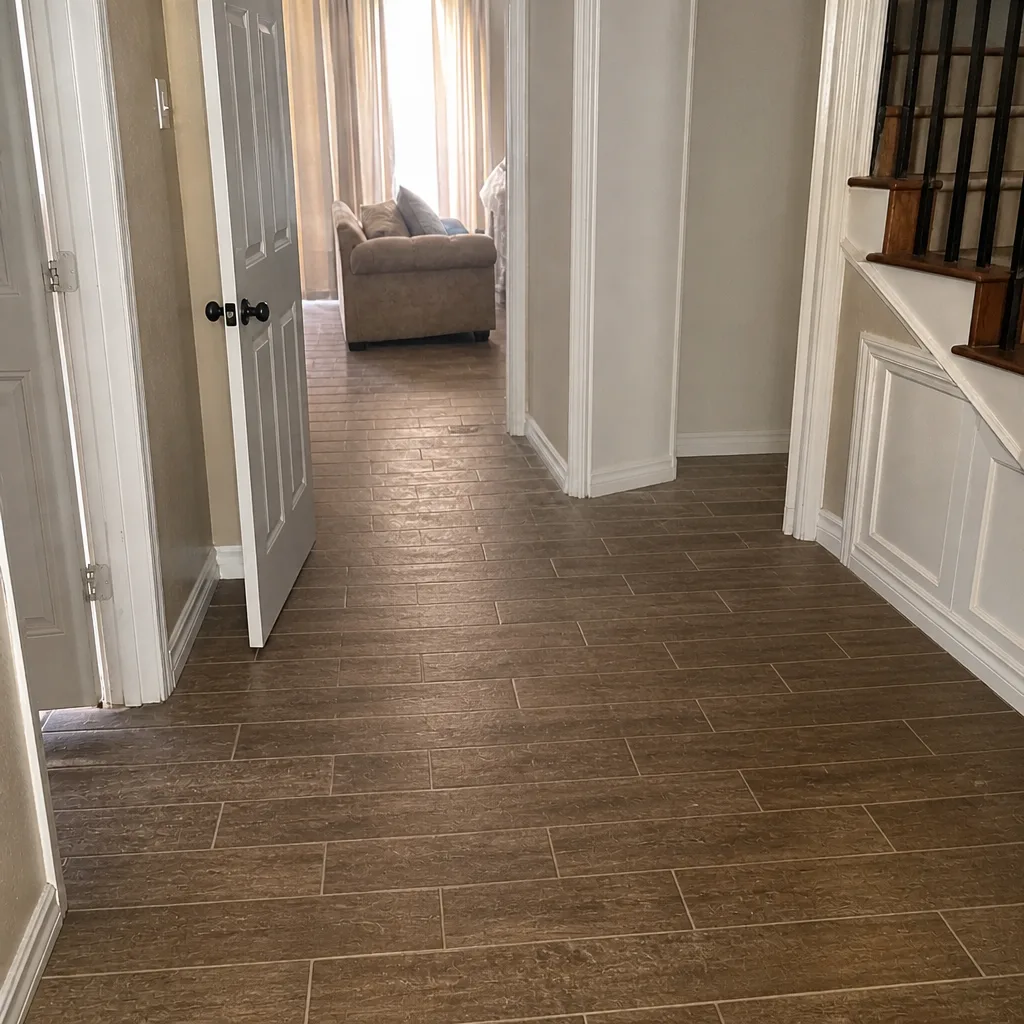
See the difference
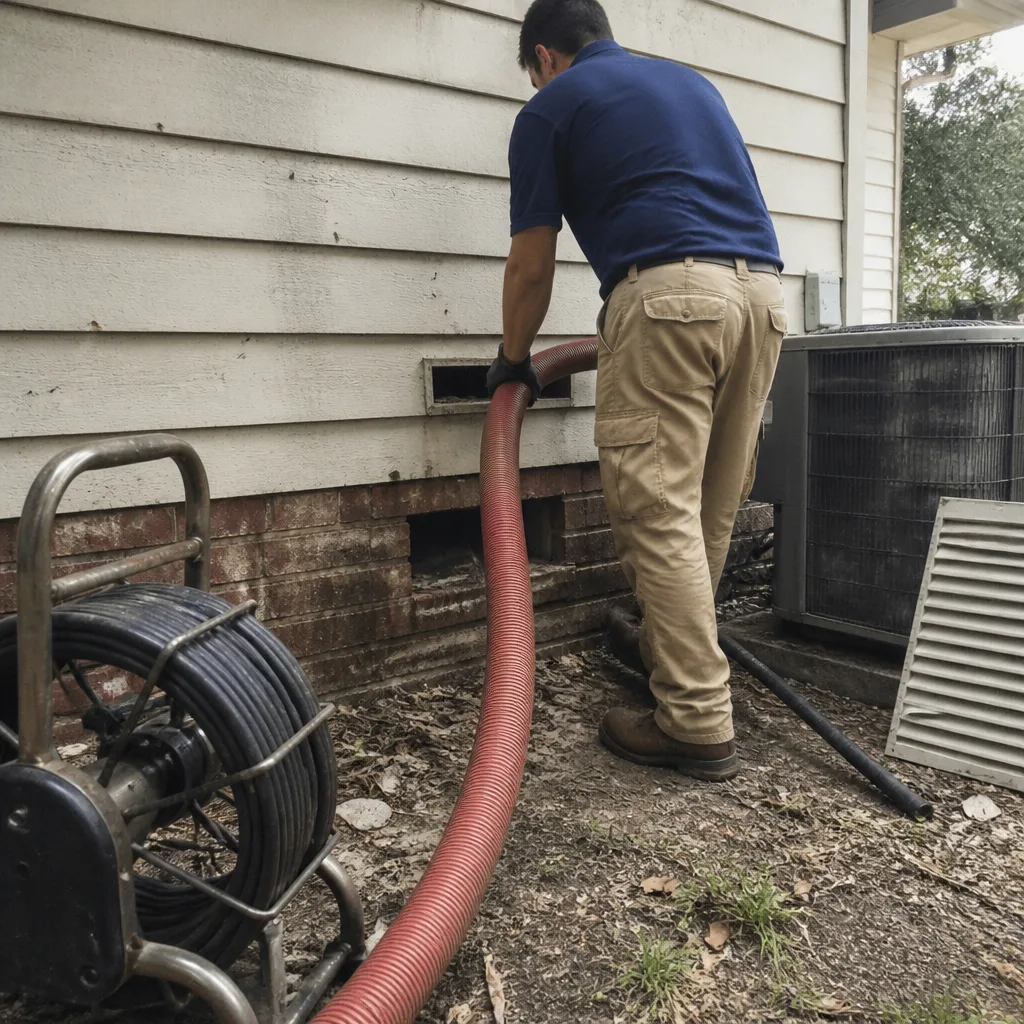 Before
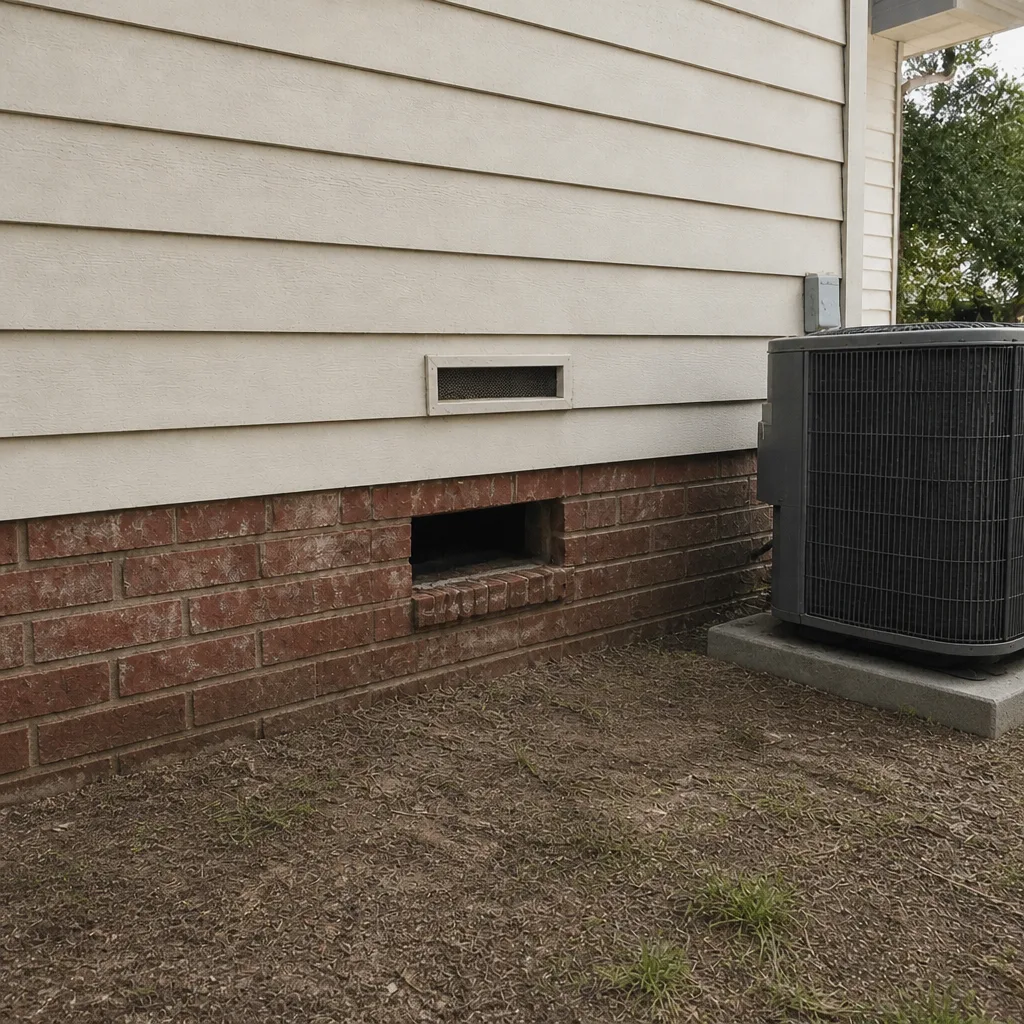 After
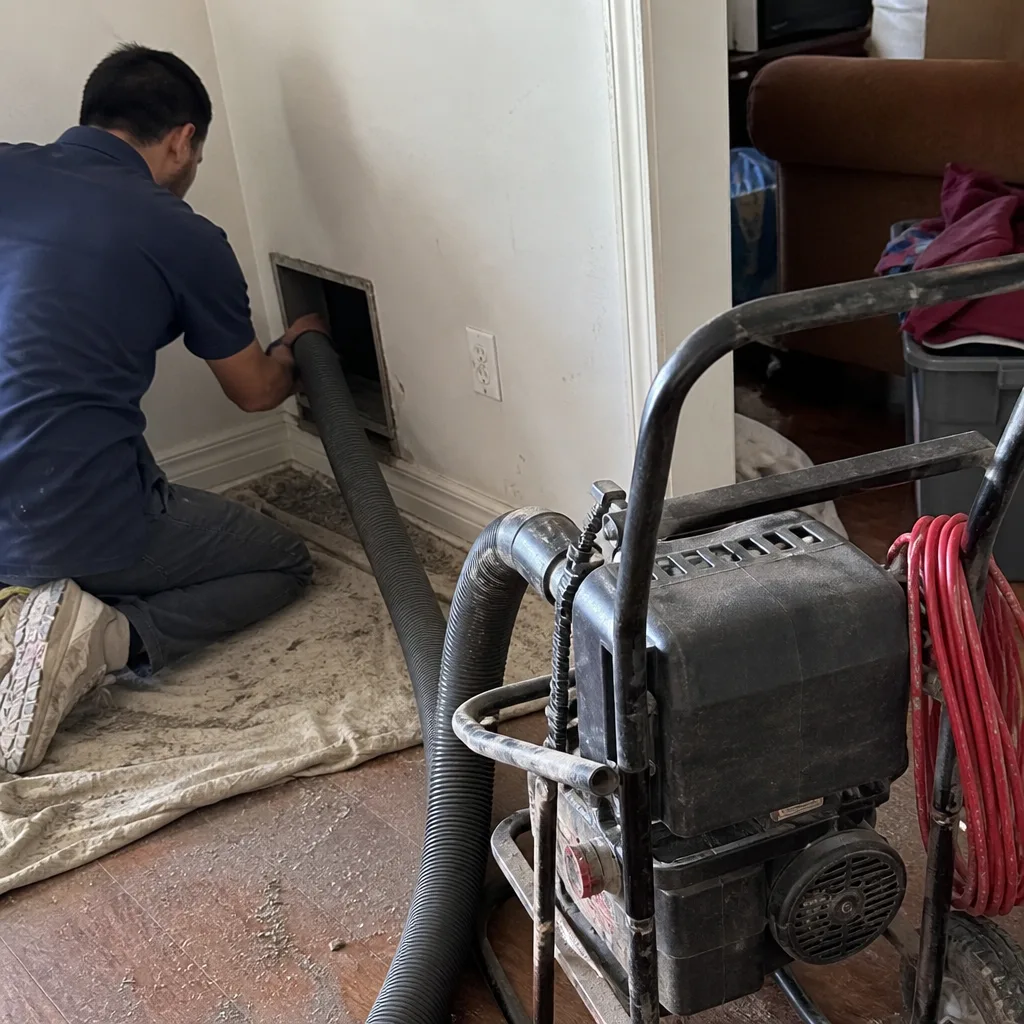 Before
 After
 Before
 After
When to Call a Professional
Some duct problems are visible from the register. Others only appear with a camera. Either way, the point at which duct cleaning becomes a professional question is when your energy bills climb without explanation, when allergy flare-ups correlate with the HVAC running, when a musty odor appears at the registers, when a home inspection flags the ductwork, or when a dryer is taking more than one cycle to finish. Those signs point to a system-level issue that a shop vac can’t address.
If you’re in Garland and you’ve been quoted a per-vent price or an offer that feels like a coupon, it’s worth a second opinion before you book. Duct Cleaning Garland offers free estimates in Garland. Call (888) 430-9938. We answer 24/7. Fast dispatch from 7am to 7pm, Sunday through Friday.
Frequently Asked Questions
Ask five equipment questions: the CFM rating of their vacuum unit, their agitation method (mechanical brush vs. compressed air), whether the collection unit has HEPA filtration, how they verify negative pressure containment during the job, and whether camera inspection footage of the before and after condition is provided. Then require a flat per-job price in writing. Call (888) 430-9938 for a free estimate if you want to ask those questions directly.
Per-vent pricing is rarely a good deal because it doesn’t cover the whole system and it creates an incentive to move quickly rather than thoroughly. A single flat price per system is the structure that aligns the contractor’s interests with doing the job right. Ask for a total before anyone books. Call (888) 430-9938 for an exact quote on your Garland home.
Routine duct cleaning typically does not require a permit. Duct modification, reconnection, or system changes often do, and the requirement varies, so ask your contractor directly and confirm with the City of Garland building department. Mold remediation is a separate scope from cleaning and has its own requirements. Call (888) 430-9938 to discuss what your job will involve.
ACT stands for Assessment, Cleaning and Restoration, and NADCA’s ACT program defines the industry standard for how duct cleaning should be performed: inspecting first, cleaning via source removal, and restoring (sealing or repairing) any ducts found to be damaged. When a contractor mentions NADCA, ask whether they follow the ACT standard and whether duct repair is in their scope. Call (888) 430-9938 if you want to know how that applies to your home.
Before-and-after camera footage of your duct interiors is the standard of proof. Legitimate contractors document the condition of the system before cleaning and again afterward, and provide that documentation to you. If a contractor can’t or won’t, you have no way to verify the work. Call (888) 430-9938 and ask what documentation you’ll receive.
There’s no universal interval. A home with pets, recent renovation dust, or allergy-sensitive occupants may benefit from cleaning more often than a home with none of those factors, and a camera inspection is the way to decide based on the actual condition of your ducts rather than a calendar. In North Texas, where the HVAC runs hard for much of the year, an assessment every few years is reasonable. Call (888) 430-9938 to book one.
The Bottom Line
Hiring a duct cleaning contractor in Garland comes down to three things: equipment, price structure, and documentation. Ask the five equipment questions before you book. Demand a flat per-system price in writing, not a per-vent rate. Require before-and-after camera footage so you can verify the work. Understand what NADCA ACT actually covers, and ask about permit and liability requirements if the scope involves modification or mold remediation. The contractors who pass those screens are the ones worth your time, and the ones who don’t will tell you everything you need to know on the first call.
If you’re ready to book a free estimate with an operator who’ll answer every question in this guide without hesitation, call Duct Cleaning Garland at (888) 430-9938. We answer 24/7. Fast dispatch from 7am to 7pm, Sunday through Friday. We’re closed on Saturday.
Written by the team at Duct Cleaning Garland.