
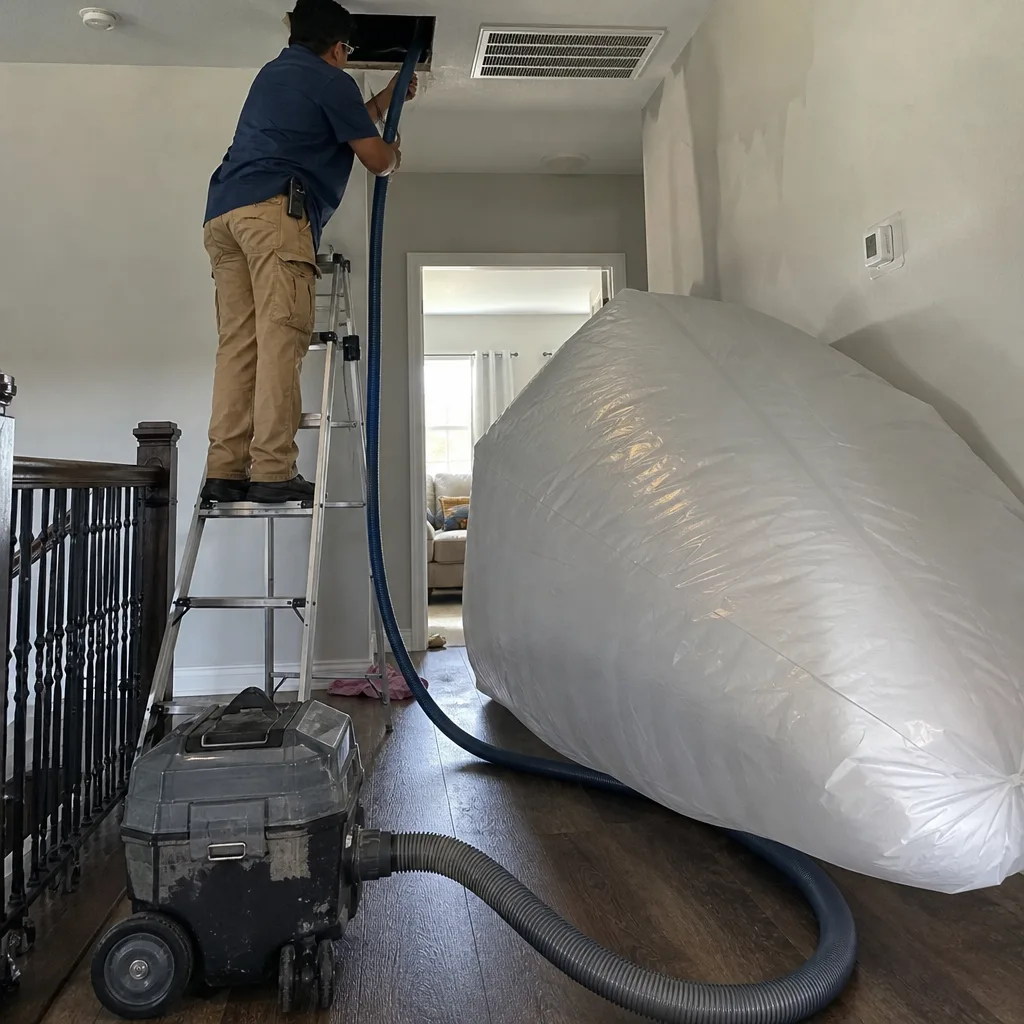
Last updated November 15, 2026
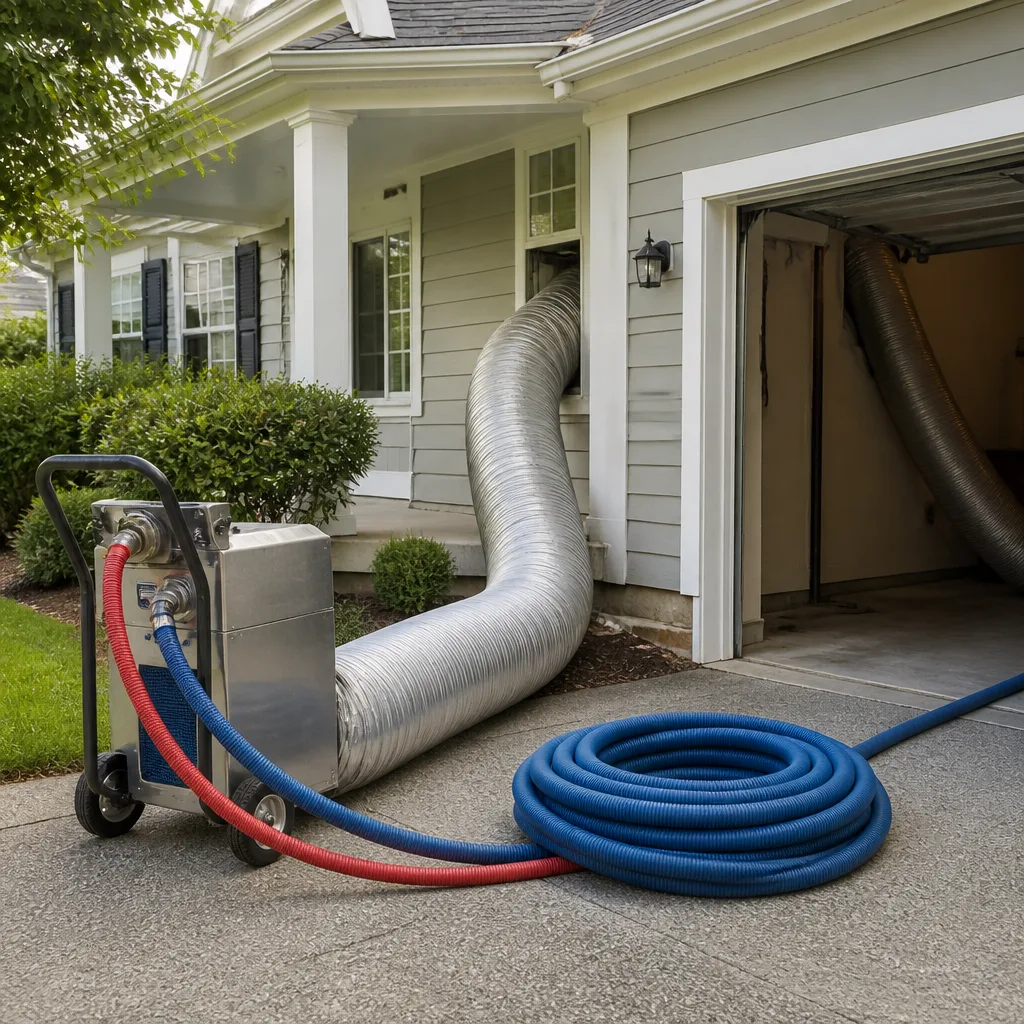 Whole-home duct cleaning
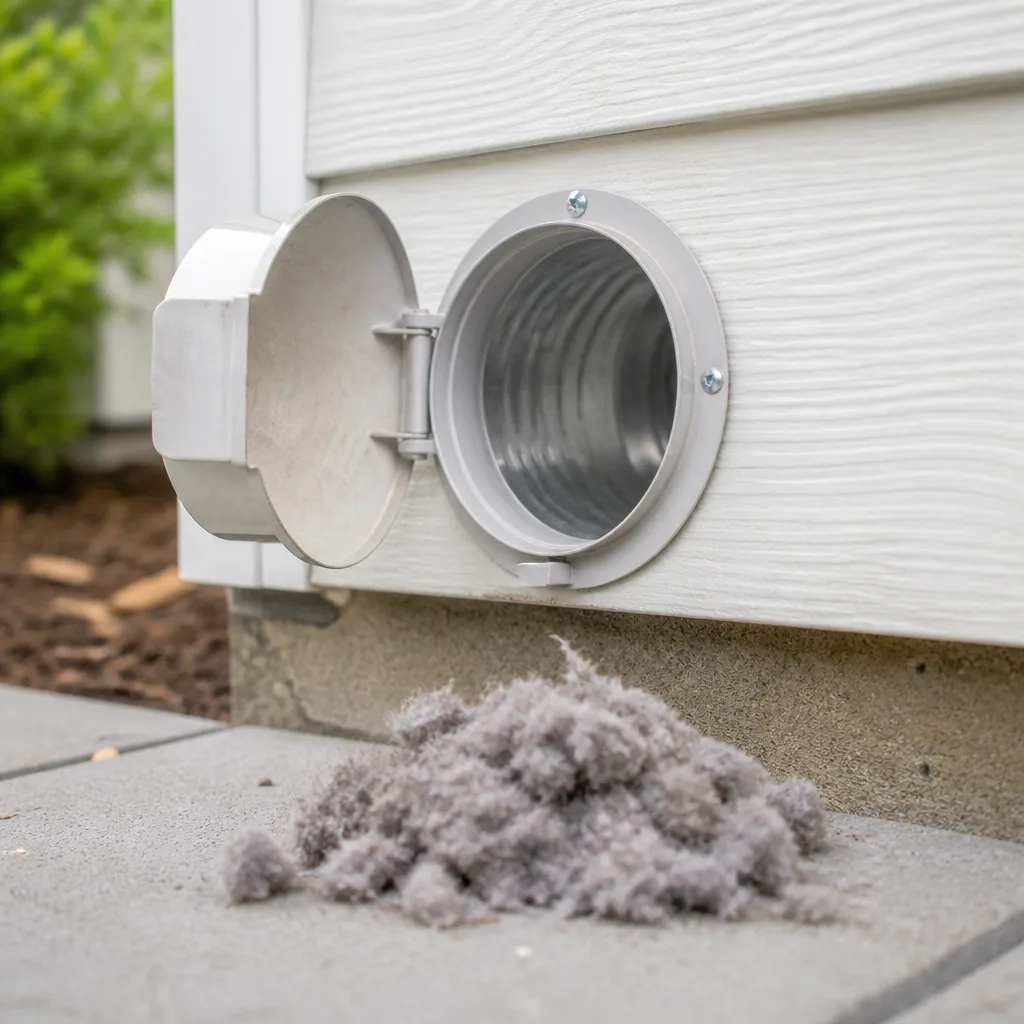 Dryer vent cleaning
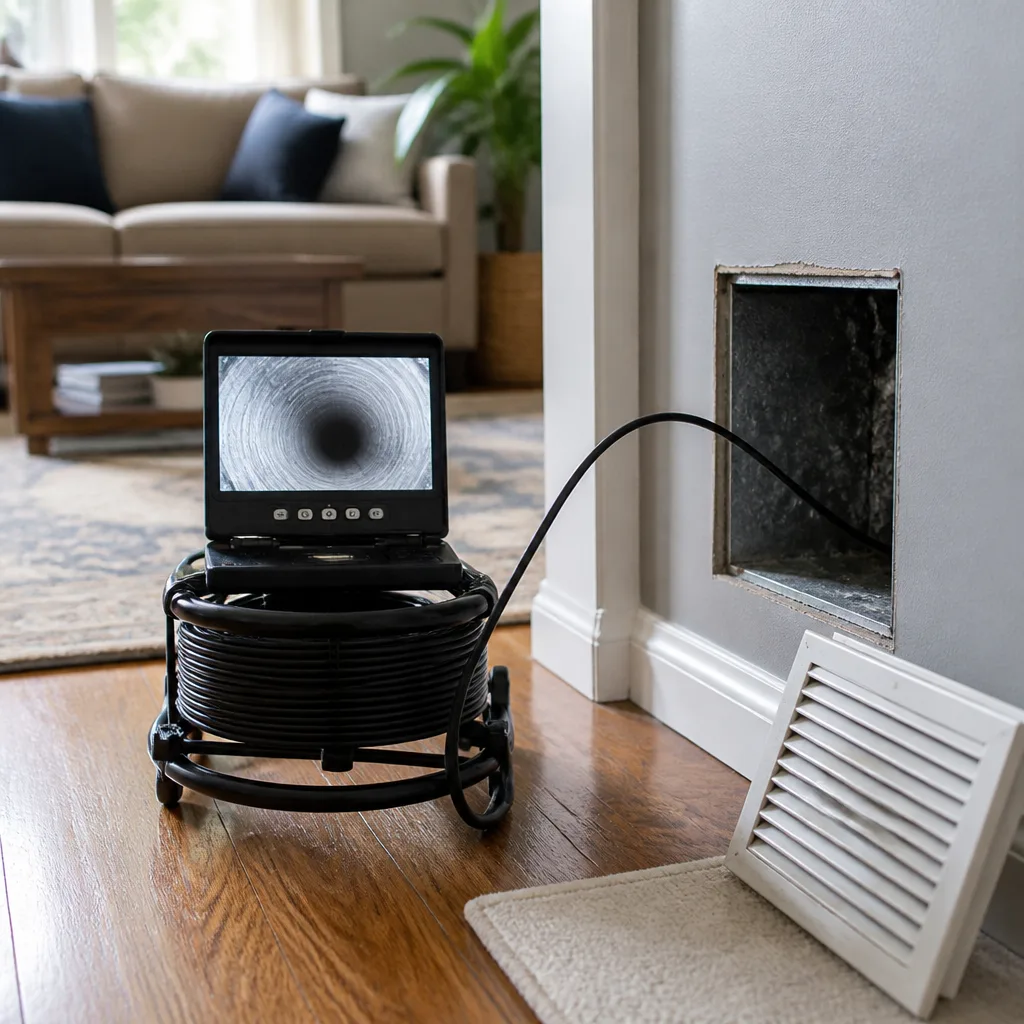 Camera inspection
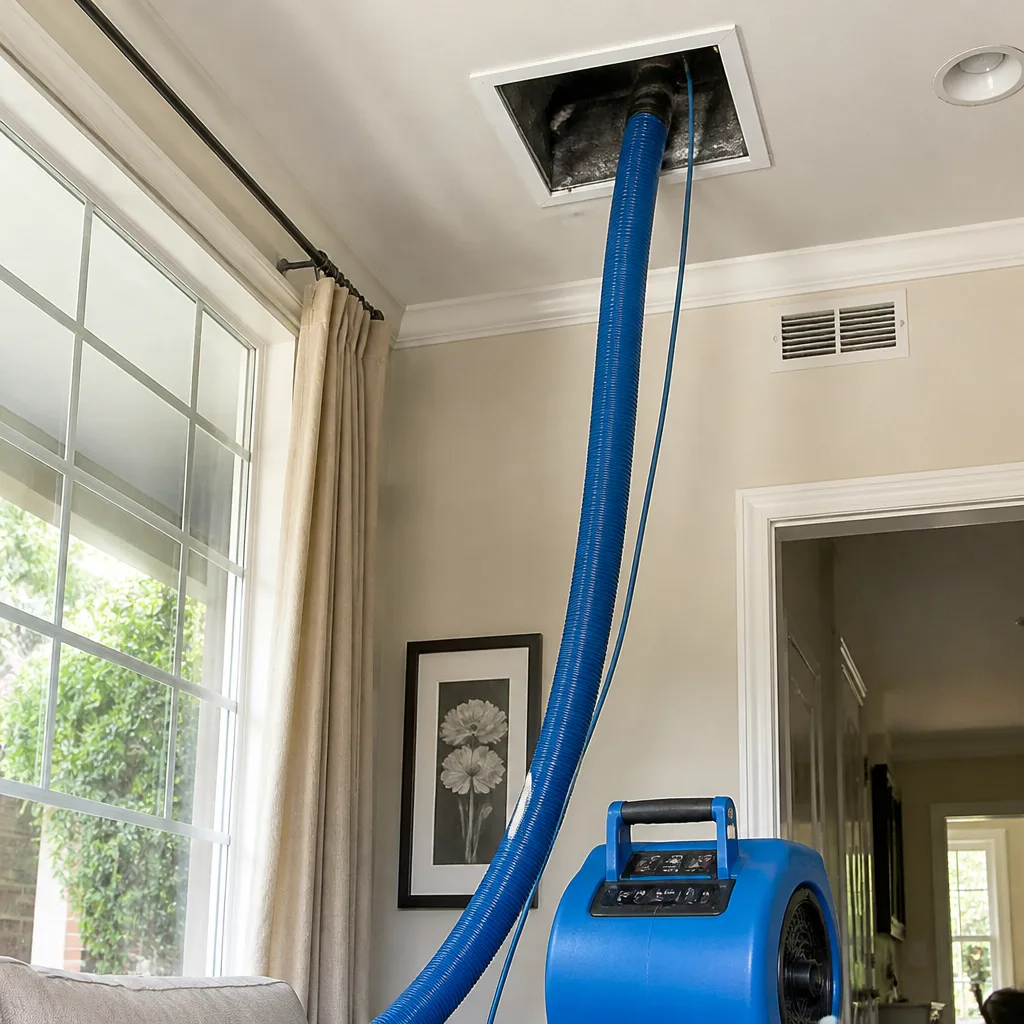 Sanitizing & deodorizing
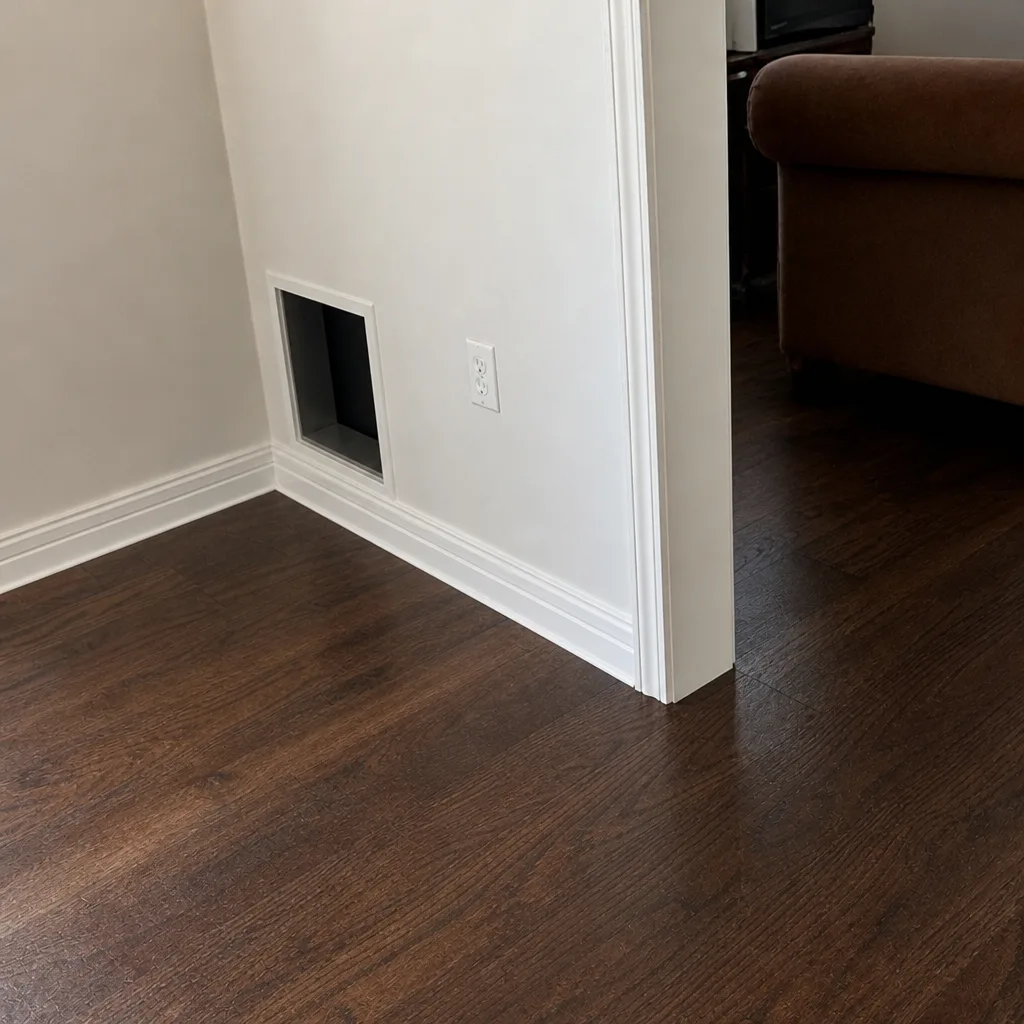
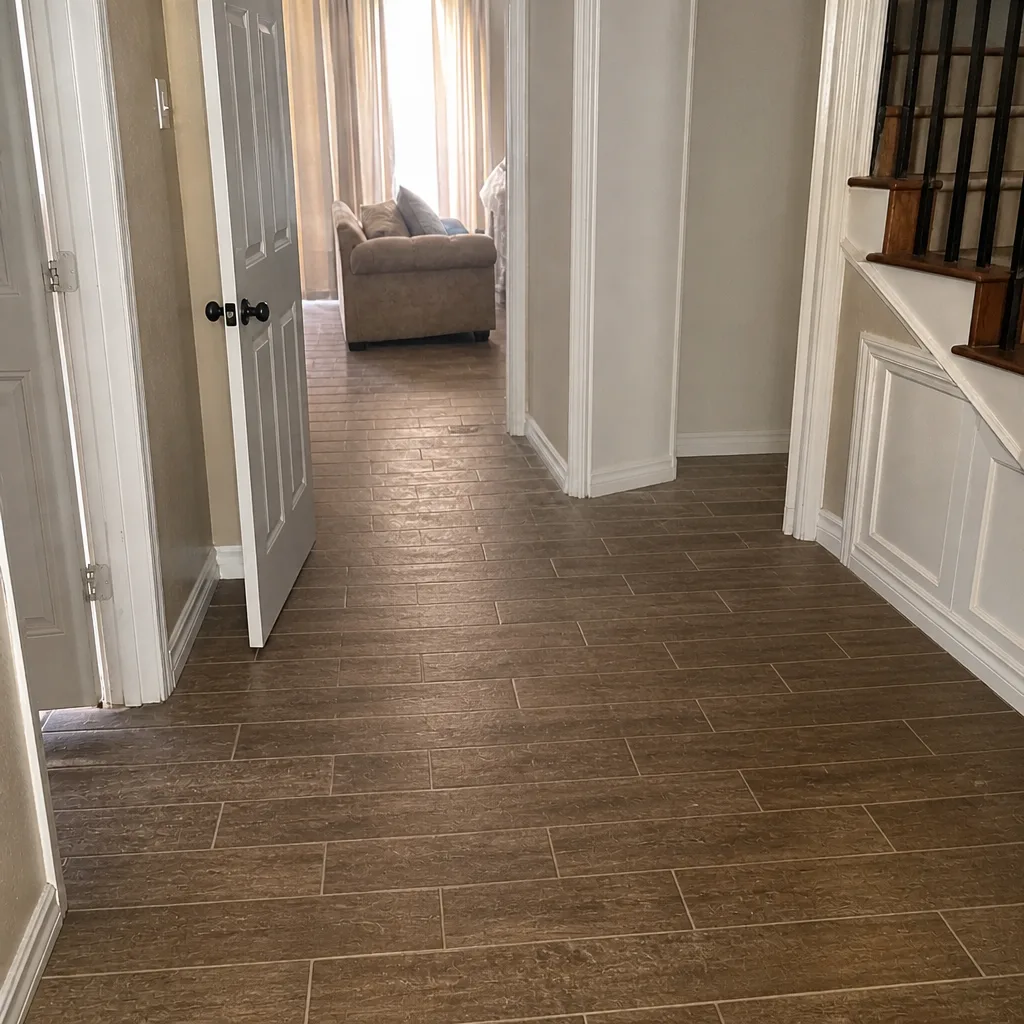
Whole-system duct and dryer vent check with before-and-after photos - you see exactly what came out of your vents
That "$99 whole-house special" is a bait ad - the real number appears once they are in your hallway, or the "clean" is a shop-vac at the register. We photograph the inside of your ducts before and after instead.
Seasonal Air Duct Cleaning Care for Garland: Year-Round Homeowner’s Guide
Most homeowners schedule duct cleaning in fall because “fall is a good time,” which ignores a hard fact about this region: Garland’s mountain cedar season doesn’t peak until December and February. Cleaning in October means you’re clearing the system just before the heaviest biological load arrives, not after it. North Texas HVAC systems don’t take stress evenly across twelve months either. Pollen, humidity swings, new construction dust, and the first furnace cycle each hit the ductwork at different times of year. This guide maps the actual seasonal demand curve for Garland homes to a practical, month-by-month duct care calendar you can act on.
Quick Answer
The best time to clean air ducts in Garland is late winter or early spring (February through April), just before cedar and oak pollen load peaks and before summer cooling demand locks in. For most Garland homes, an April inspection is more strategically valuable than a post-summer cleaning, because it catches moisture problems and duct breaches before the system runs hard for six months. A second light inspection in October catches ragweed buildup before furnace startup.
Styles & brands we work with
- Whole-home duct cleaning
- Dryer vent cleaning
- Camera inspection
- Sanitizing & deodorizing
Table of Contents
- How Garland’s Pollen Calendar Maps to Duct Contamination
- Summer Humidity and Condensation Inside Garland Ductwork
- Why Pre-Summer Inspection Beats Post-Summer Cleaning
- Construction Dust in Firewheel and Eastern Growth Zones
- Winter Furnace Startup: The Heat Exchanger Check
- Your 12-Month Garland Duct Care Calendar
- What Professional Equipment Actually Changes
- Air Duct Repair: Fixing What Cleaning Alone Can’t
How Garland’s Pollen Calendar Maps to Duct Contamination
Garland sits in a pollen corridor that runs nearly year-round. That’s the single most important difference between a duct care plan here and one in a milder climate. Contamination load isn’t uniform, and it isn’t tied to how often you vacuum the floors. It’s tied to what’s blowing outside when your system is pulling return air from the house.
Here’s the pollen sequence most Garland homeowners aren’t tracking:
- Mountain cedar (December through February): The heaviest single biological load of the year. Fine, highly irritant particles that settle into duct interiors and stay there because central Texas heating cycles are gentle.
- Elm (February through March): Overlaps the tail of cedar season. Fine particulates that penetrate standard return filters.
- Oak and grass (April through May): Coarse and heavy pollen, plus grass clippings tracked in during spring mowing. Different particle size, similar destination.
- Ragweed (August through October): The fall load most people associate with duct problems. Arrives just as cooling demand starts to drop and airflow through the system slows.
The practical implication is that a single annual cleaning scheduled for “fall” catches roughly one of these four cycles. If your household has allergy concerns, the highest-value cleaning lands in late February or early March, between cedar tail-off and oak onset. That timing pulls the cedar and elm load out before the spring surge piles on top of it.
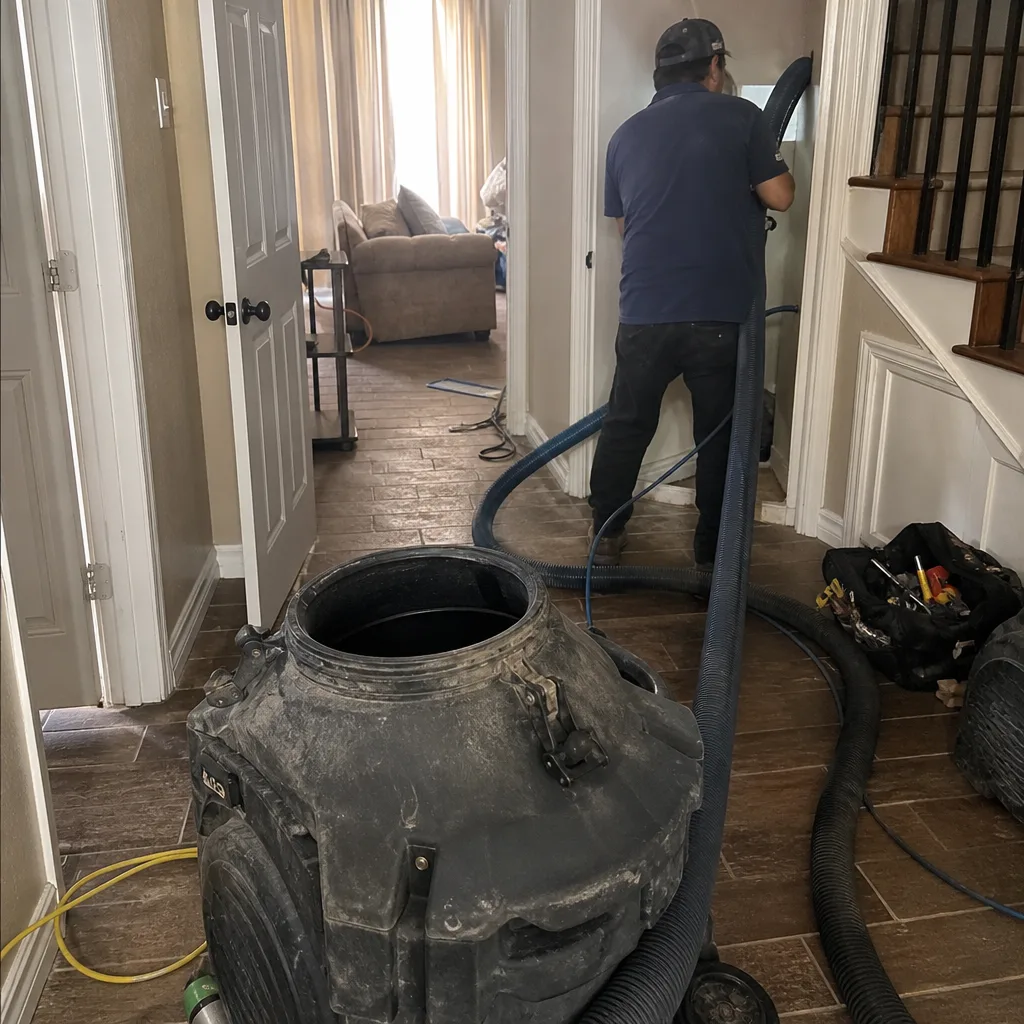
This is where professional extraction matters. Cedar pollen doesn’t just settle on top of ducts. It clings to the interior walls of galvanized metal and flexible duct alike. A compressed-air agitation method loosens it but leaves most of it stuck. The Rotobrush brush system we deploy is a mechanical method. It makes physical contact with the duct walls and pulls debris into the extraction airstream, which is a materially different result than blowing air through a system and calling it clean.
For a fuller explanation of how cleaning and allergy relief intersect, see our air duct cleaning service page.
Summer Humidity and Condensation Inside Garland Ductwork
North Texas summer humidity creates a specific problem inside ductwork that doesn’t get talked about enough: condensation on cold interior surfaces during the shoulder months when the AC cycles on and off irregularly. That’s typically April through May and again in September through October.
During peak summer, when the AC runs continuously, duct interiors stay cold and condensation is minimal because airflow keeps surfaces dried out. When the system short-cycles, which happens a lot in spring and fall as outdoor temperatures swing, cold metal warms and cools repeatedly. Moisture condenses in that window. Over years, that moisture deposits feed biological growth inside insulated flex duct and along seams in metal trunk lines.
What to watch for in your Garland home during transition months:
- Musty odor when the AC first kicks on: Classic sign of moisture-fed growth on interior duct surfaces.
- Water staining on ceilings near supply registers: Often a condensate line problem, but sometimes points to duct insulation saturated by condensation.
- Visible condensation on exposed ductwork in the attic: Indicates an insulation issue that will keep returning unless addressed.
- Irregular AC run times: Short cycling during shoulder seasons is the trigger, not the symptom. It’s worth having a duct inspection while the pattern is happening.
Addressing moisture at the duct level is why we treat air duct cleaning as one part of a system. Integrating with whole-home air-quality systems such as Honeywell and Aprilaire filtration and humidity controls lets you manage the moisture load instead of just cleaning up after it. Cleaning ducts without addressing the humidity behavior that caused the growth is a cycle you’ll repeat.
Why Pre-Summer Inspection Beats Post-Summer Cleaning
Most homeowners call for duct cleaning in September or October because that’s when they notice the dust problem. From a strategic standpoint, that’s backwards for most Garland homes.
Here’s the reasoning. Garland homes in established neighborhoods like Firewheel, Camelot, and the Duck Creek corridor tend to run oversized HVAC systems. Oversized tonnage cycles more frequently and moves more air than the square footage actually needs. That means the ductwork sees more airflow per hour of operation and accumulates debris faster than a correctly sized system. The failure mode is a system working harder than it should over six months of cooling season.
An April inspection catches three things before that six-month window opens:
- Duct breaches and disconnected sections: Loose flex duct joints and taped connections that have separated. Every disconnected run dumps conditioned air into the attic and pulls unconditioned attic air back into the system. That’s the most expensive kind of dust source.
- Insulation failures on flex duct: Ripped jacket, compressed runs, and kinked sections that reduce efficiency without obvious symptoms.
- Debris load from winter: Cedar, elm, and everyday dust accumulated through the heating season, ready to be distributed through the house the moment the first hot week hits.
Post-summer cleaning still has value, but the leverage is lower. By October the system has already run its hardest months and the damage (if any) is done. If you can only do one professional inspection per year in Garland, do it in April. Running a full inspection sequence is worth the time, and our Garland service area page lays out what a full visit covers.
Construction Dust in Firewheel and Eastern Growth Zones
Garland’s eastern growth corridors, including the Firewheel area and the newer development pushing past the President George Bush Turnpike, generate a seasonal dust signal that established neighborhoods don’t. During active construction months, ambient particulate load in the air goes up measurably, and every home downwind of it pulls that dust into its HVAC system.
The schedule for this follows the construction calendar, not the pollen calendar. Peak new-build activity in Garland typically runs late spring through fall. Homes within a half-mile of active grading, foundation pours, and roof installs run higher return-air dust loads regardless of what the pollen count says.
What this means for duct care specifically:
- Filter changes need to be more frequent during active construction periods. A filter that normally lasts a season may load up in half that time if you’re adjacent to a grading site.
- Return-air grilles act as primary dust traps and should be checked monthly during heavy construction windows.
- Duct cleaning has a different priority in a construction-adjacent home than a mature one. You’re clearing fine silt and concrete dust, not primarily pollen. That’s an argument for mechanical extraction (brush system) over air agitation, because silt clings and caking builds up in low-velocity runs.
If you live in Firewheel, Camelot, or the newer communities east of the turnpike, tracking the construction activity around you is a legitimate reason to move your cleaning schedule around. A neighborhood that’s quiet for two years can go loud fast, and duct interiors that stay clean in a quiet neighborhood won’t stay clean in an adjacent one.
Winter Furnace Startup: The Heat Exchanger Check
The first cold week in Garland is the single highest-risk window in the duct year. Heat exchangers and gas furnaces that sat idle for months come online, and duct interiors that accumulated debris through cooling season are now in direct proximity to a hot combustion source.
Before your first heat cycle, walk through this checklist:
- Change the filter before startup, not after. Airflow restrictions on a first run are the number one cause of furnace limit trips.
- Check supply registers for lift or pressure leaks. Warm air leaks into the attic can create safety issues over time, especially on older homes in Garland where duct tape around trunk connections has dried out.
- Inspect for visible dust buildup around the heat exchanger cabinet. If you see accumulation right at the unit, the ductwork serving it is likely inside that condition too.
- Listen for unusual sounds at startup. Rattling that wasn’t there last winter can point to a loose duct section or a disconnected supply run.
- Watch for CO detector activation or unexplained headaches. These are heat exchanger failure symptoms. If you suspect the heat exchanger, call a licensed HVAC technician immediately. Do not reset the system and wait. This is a life-safety issue and not something to diagnose from a duct cleaning appointment.
Note the boundary here. Heat exchanger condition is the HVAC technician’s responsibility, not the duct cleaner’s. We approach cleaning as a service that removes accumulated debris from the ducts feeding and returning from that exchanger. We don’t inspect the heat exchanger itself. What we do is ensure that when the technician inspects it, they’re working with a system that isn’t covered in months of buildup.
The startup checklist is also the best window to schedule cleaning if you didn’t do it in April. Debris that sat through summer and then blew into the living space on the first heat cycle is more annoying than dangerous, but cleaning it out after the fact is easier than tracking down allergy complaints all winter.
Your 12-Month Garland Duct Care Calendar
This is the practical sequence we recommend for most Garland homes. Adjust if you’re construction-adjacent, allergy-sensitive, or managing a system that’s already showing symptoms.
- January: Change filter. Watch for cedar-season allergy flares. If the home has never been cleaned, schedule a full inspection now.
- February to March: Best window for a full professional air duct cleaning. Cedar and elm load is peaking and you want the system clean before oak and grass follow.
- April: Pre-summer inspection. Check for breaches, disconnected runs, and insulation failures. This is the highest-value visit of the year for most Garland homes.
- May: Confirm AC is running clean and filter has been changed for the cooling season.
- June to August: Peak cooling. Change filters more frequently if you’re near construction. Watch for musty odors and unusual humidity.
- September to October: Ragweed peak. Light cleaning or spot inspection if allergy symptoms return. Schedule dryer vent cleaning for fire-safety reasons if it hasn’t been done this year.
- November: Furnace startup checklist. Filter change before the first cold cycle. Confirm registers are intact.
- December: Cedar season begins. Monitor indoor air quality. If you cleaned in February or March, you’re in a good position. If not, this is the second-best full cleaning window.
Dryer vent cleaning doesn’t follow the seasonal duct curve the same way. It’s a fire-safety service and should be scheduled on its own timeline regardless of season. For more, see our dryer vent cleaning page.
What Professional Equipment Actually Changes
Most of what determines whether a duct cleaning job does anything comes down to the equipment, not the marketing. It’s worth knowing the difference before you hire anyone in Garland.
There are three categories of equipment that show up on residential calls:
- Consumer and prosumer vacuums dressed up as duct equipment: Undersized shop vacuums and portable canisters that don’t have the airflow capacity to move debris through a full trunk line. They clean the first few feet of a supply run and nothing beyond.
- Compressed-air agitation only: A truck-mounted or portable air compressor blows through the ducts. It loosens debris from surfaces but relies on downstream filtration to catch it. On duct walls where debris is adhered (typical after cedar season), this method leaves most of the load behind.
- Mechanical contact extraction with negative pressure: The professional standard. Rotobrush brush systems make physical contact with duct walls and mechanically dislodge adhered debris. Nikro extraction systems provide the airflow to carry that debris out of the system. Abatement Technologies containment equipment maintains negative pressure during the job so loosened contaminants don’t blow into living spaces.
That third category is what we deploy on every job. All three components matter. Brush alone without extraction is just moving dust around. Extraction alone without agitation can’t break debris free from duct walls. Containment without the other two doesn’t matter because there’s nothing to contain. It’s the combination that produces a system that’s actually clean.
If you’re going to ask a duct cleaner one question before booking, ask what equipment they’ll actually use on-site. A specific answer with brand names and technical terminology is a good sign. “Our truck-mounted unit” without specifics is not. You can see how we describe this on our Duct Cleaning Garland overview page.
Air Duct Repair: Fixing What Cleaning Alone Can’t
Clean ductwork leaks. That’s the uncomfortable fact that drives us to offer air duct cleaning as one service and air duct repair as another. Cleaning without repairing leaks is temporary because the same leak reintroduces the same load the day after the job.
Common repair scenarios we find in Garland homes:
- Disconnected flex duct at supply boots: The most common issue in attics with older flex runs. Gravity and thermal expansion work taped connections loose over time.
- Separated trunk line joints: Sheet metal trunk sections with failed seam tape or duct mastic push large volumes of conditioned air into the attic while pulling unconditioned air back into the system.
- Torn flex duct jacket: Punctures from attic storage movement, pest activity, or simple aging.
- Collapsed or kinked flex runs: Severely restricted airflow that no amount of cleaning will fix.
- Improperly sealed register boots: Gaps between drywall and the supply boot that leak air into wall cavities.
The reason repair is part of the same visit, not a separate appointment, is that we’re already in the system. When we find a breach during cleaning, we can address it in the same trip instead of leaving the homeowner with a clean but still-leaking system. That’s what “we repair what we find” means in practice: the cleaning shows us what’s wrong, and the repair makes the cleaning hold.
Common Mistakes to Avoid
- Scheduling by habit rather than by pollen calendar. Cleaning in October because “fall is a good time” puts you one full season past the cedar and elm peak. Time the cleaning to the specific load you’re trying to clear.
- Skipping the April inspection. Waiting until summer symptoms show up means running an oversized system through six months of buildup. The April visit catches breaches before they do damage.
- Hiring an air-blowout-only operator. If the equipment is a compressor and nothing else, you’re getting agitation without extraction. Ask what brand names are on the truck. “Rotobrush” and “Nikro” are specific. “Our powerful system” is not.
- Assuming duct cleaning fixes leaks. Cleaning doesn’t seal a disconnected flex run or a torn jacket. If a breach exists, cleaning alone is wasted money the following week.
- Ignoring construction dust in Firewheel and eastern Garland. Homes within half a mile of active grading should be changing filters more often and on a separate schedule from quiet neighborhoods.
- Running the furnace for the first time without a filter change. The first heat cycle pushes months of accumulated dust into living spaces. Change the filter before the first cold morning, not after.
- Treating dryer vent cleaning as optional. It’s a fire-safety service, not a convenience add-on. Restricted dryer vents are a leading cause of residential structure fires, and Garland homes with long vent runs across the garage or attic are the highest risk.
See the difference
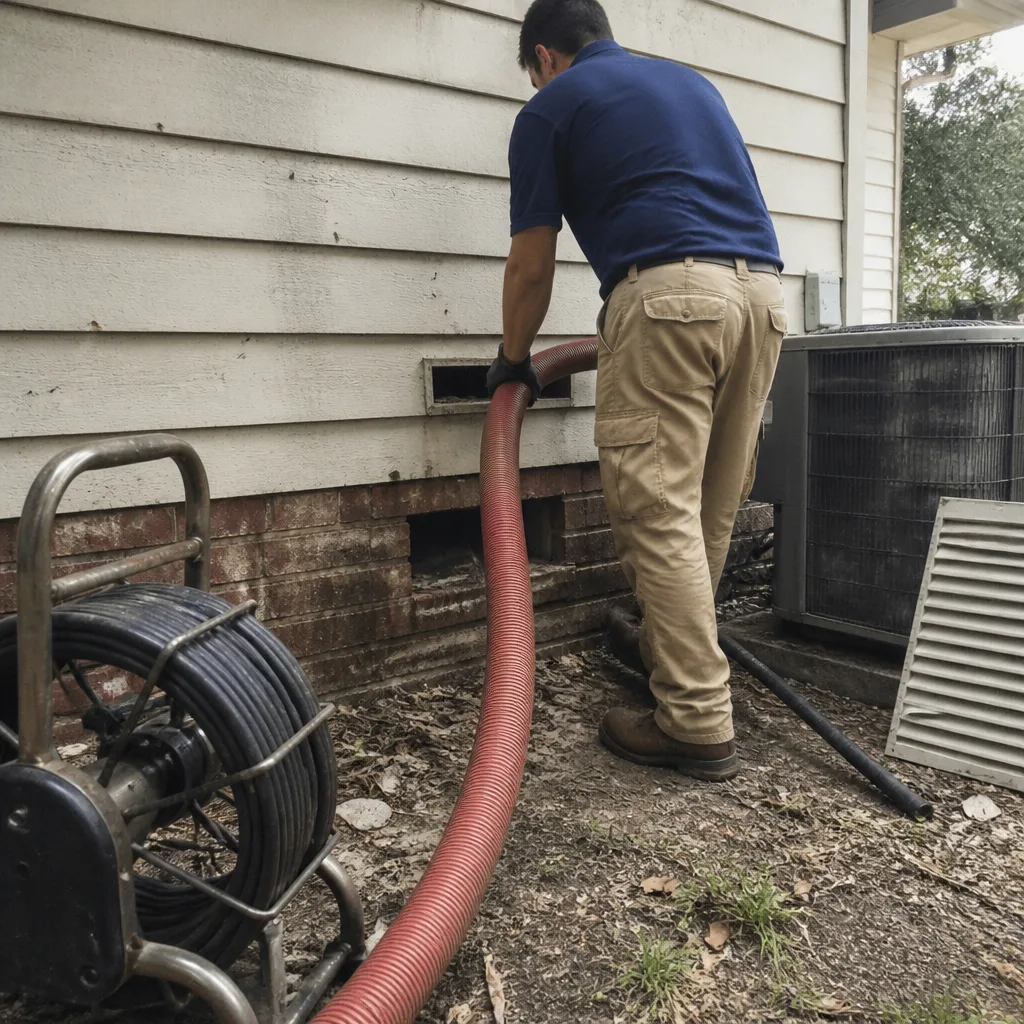 Before
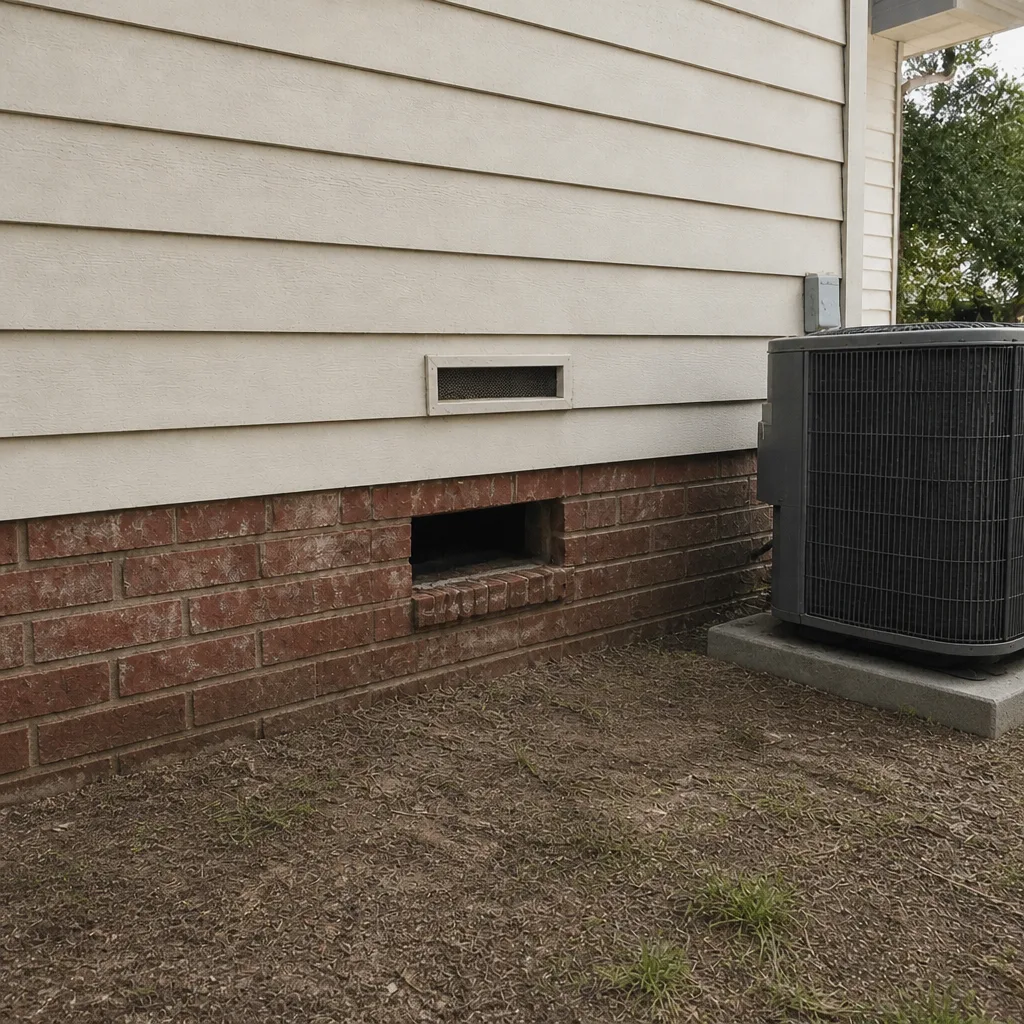 After
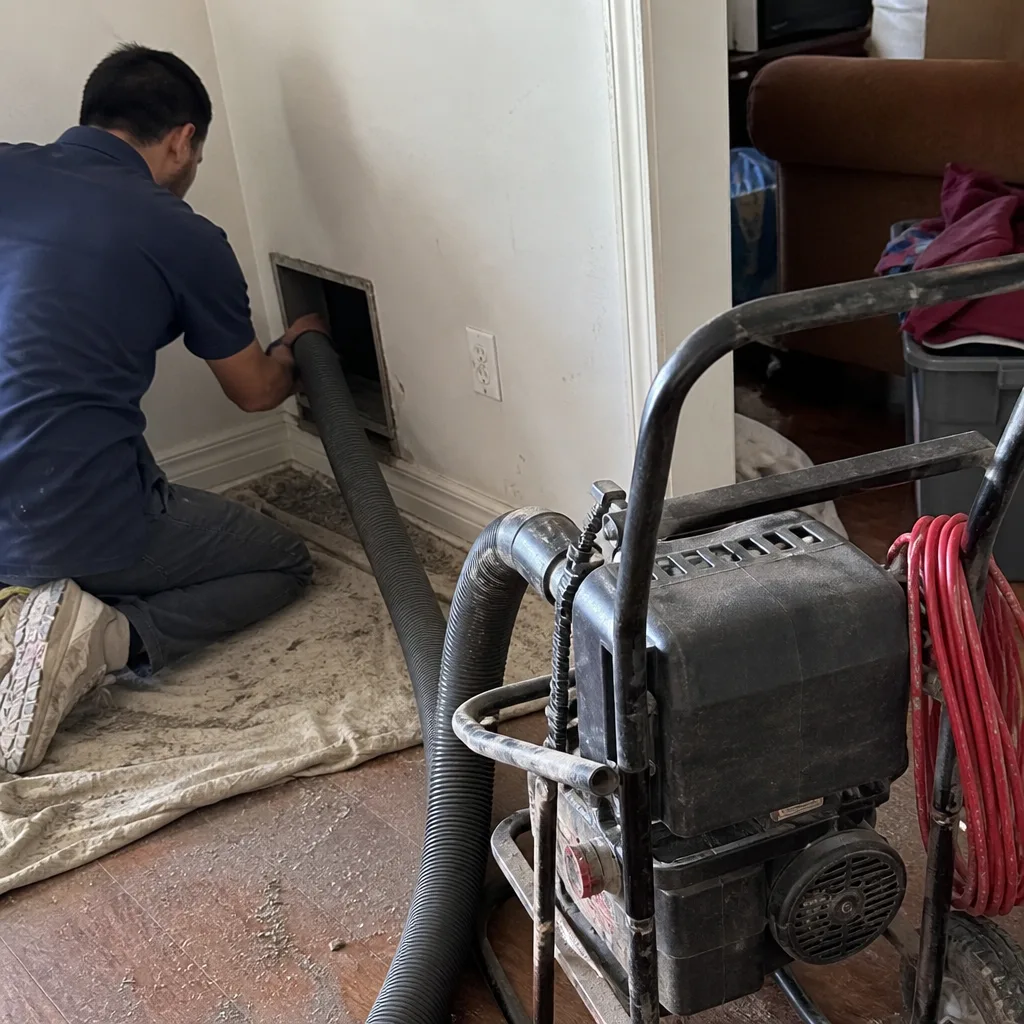 Before
 After
 Before
 After
When to Call a Professional
Most Garland homes don’t need professional duct cleaning every year. They need it when a specific signal fire. Call a professional when you notice any of the following: a visible dust plume when the system kicks on for the first time each season, persistent musty odor that doesn’t clear after filter changes, allergy symptoms that worsen only indoors and only during specific pollen seasons, a home inspection report flagging duct condition or disconnected runs, a dryer taking two cycles to dry a normal load, or a system that’s visibly blowing more air into the attic than into the rooms. If you’ve recently bought a home in Garland without service records for the ductwork, a one-time inspection is worth the call even without symptoms. Duct Cleaning Garland offers free estimates in Garland. Call (888) 430-9938. We answer 24/7, and fast dispatch runs from 7am to 7pm, Sunday through Friday.
Frequently Asked Questions
Late February or March is the best month for most Garland homes because it clears cedar and elm load just before oak and grass pollen peak. A second strong window is November, just before furnace startup, which prevents accumulated summer debris from blowing into the living space on the first heat cycle. April inspection is the highest-value single visit even if you skip a full cleaning, because it catches duct breaches before six months of cooling season amplifies the damage.
Every two to three years is typical for most Garland homes without special circumstances. Allergy-sensitive households or homes with pets may benefit from annual cleaning timed to the highest-load pollen season. Homes near active construction should follow their own schedule based on visible dust accumulation rather than a fixed interval. If you’re seeing frequent filter loading, that’s the signal to move the interval up regardless of what year it is on the calendar.
It can reduce the resuspension of settled cedar particles inside the home during heating season, which is where most of the benefit sits. Cedar pollen is fine and highly irritant, and the residue that settles into duct interiors gets pulled back into return air every time the furnace runs. Removing that accumulated load takes away one recurring source. It doesn’t filter outdoor air, so windows and fresh-air intake remain factors during peak season.
Cheap quotes usually mean either air-blowout-only methods without mechanical agitation, undersized vacuums without real extraction capacity, or per-vent pricing that turns into an upcharge once the technician is on-site. Professional duct cleaning requires real equipment: Rotobrush for brush contact, Nikro for extraction, and Abatement Technologies for negative pressure containment. If a quote is dramatically lower than others, ask what equipment will be on-site. The answer usually explains the price.
After, in almost every case. A new system installed into dirty ductwork pulls the same debris load into the new blower and coil, which can reduce the system’s lifespan. Cleaning after installation also lets you inspect the new connections and seal any leaks the installer left. If you’re replacing the HVAC in stages, cleaning before the changeover is a mistake you’ll be paying for twice.
It helps indirectly by removing the organic material (accumulated dust, pollen, and biological growth) that holds moisture inside duct insulation and feeds musty odors. It doesn’t solve humidity control itself. If you’re seeing condensation on duct surfaces in the attic or persistent musty smell during shoulder seasons, the fix usually involves addressing insulation, sealing breaches, or integrating a whole-home humidity control system such as an Aprilaire unit. Cleaning is one part of the solution, not the whole thing.
The Bottom Line
Garland’s duct care calendar isn’t the generic “clean in fall” advice most lists offer. The pollen curve (cedar, elm, oak, grass, ragweed) dictates when biological load peaks. The humidity pattern (heavy in summer, inconsistent in shoulder months) dictates when condensation risk is highest. Construction activity in eastern Garland corridors dictates when dust load jumps independent of the seasons. The right plan matches your specific home to those curves rather than following a fixed month. An April inspection and a February-to-March cleaning cover most homes well. Mechanical extraction with professional equipment is what turns a duct cleaning from theater into a real result. Our technicians have up to 13 years of experience and we repair what we find.
Contact
If you’re ready to schedule a free estimate, call us at (888) 430-9938. We answer 24/7. Fast dispatch from 7am to 7pm, Sunday through Friday. We’ll walk through your Garland home’s system, show you the equipment we bring, and give you a written estimate before any work begins. If we open a duct and find a breach, we’ll show you that too.
Written by the team at Duct Cleaning Garland.