
Last updated November 15, 2026
 Whole-home duct cleaning
 Dryer vent cleaning
 Camera inspection
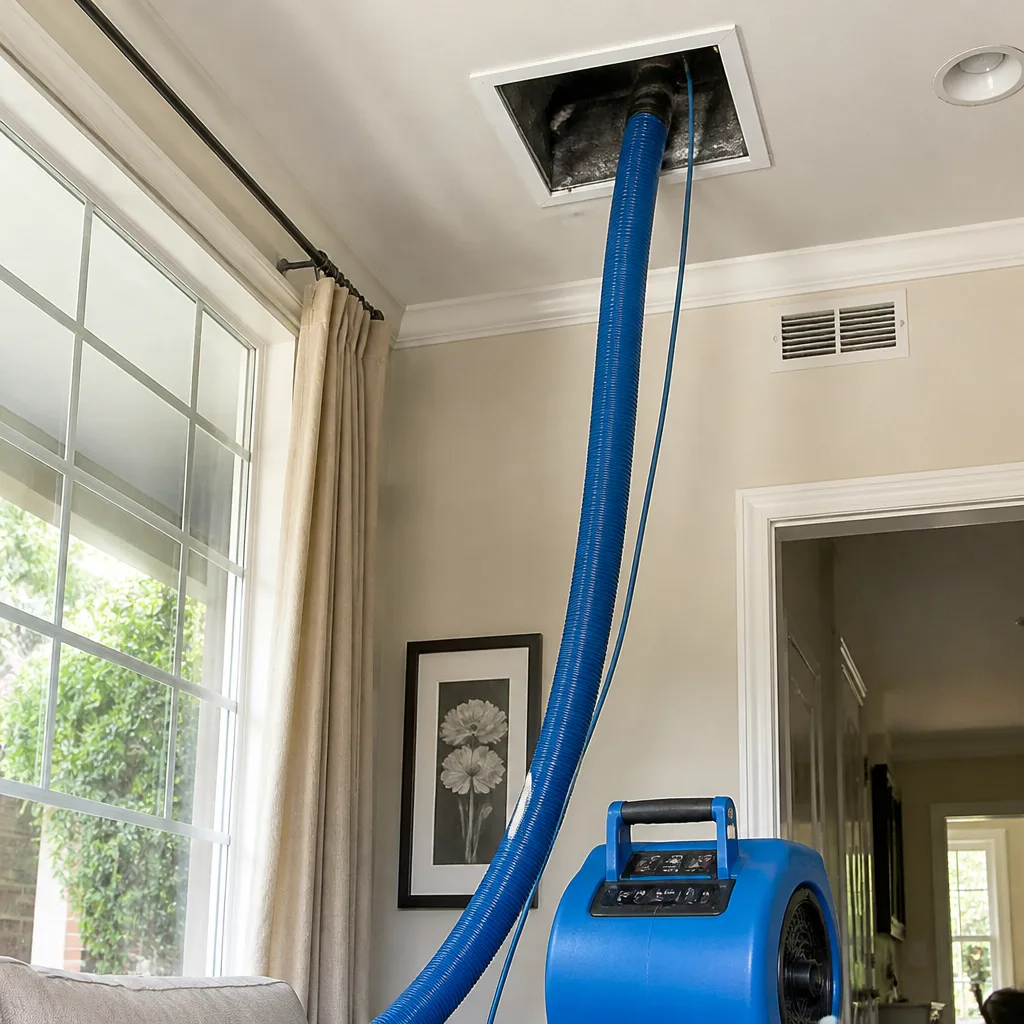 Sanitizing & deodorizing
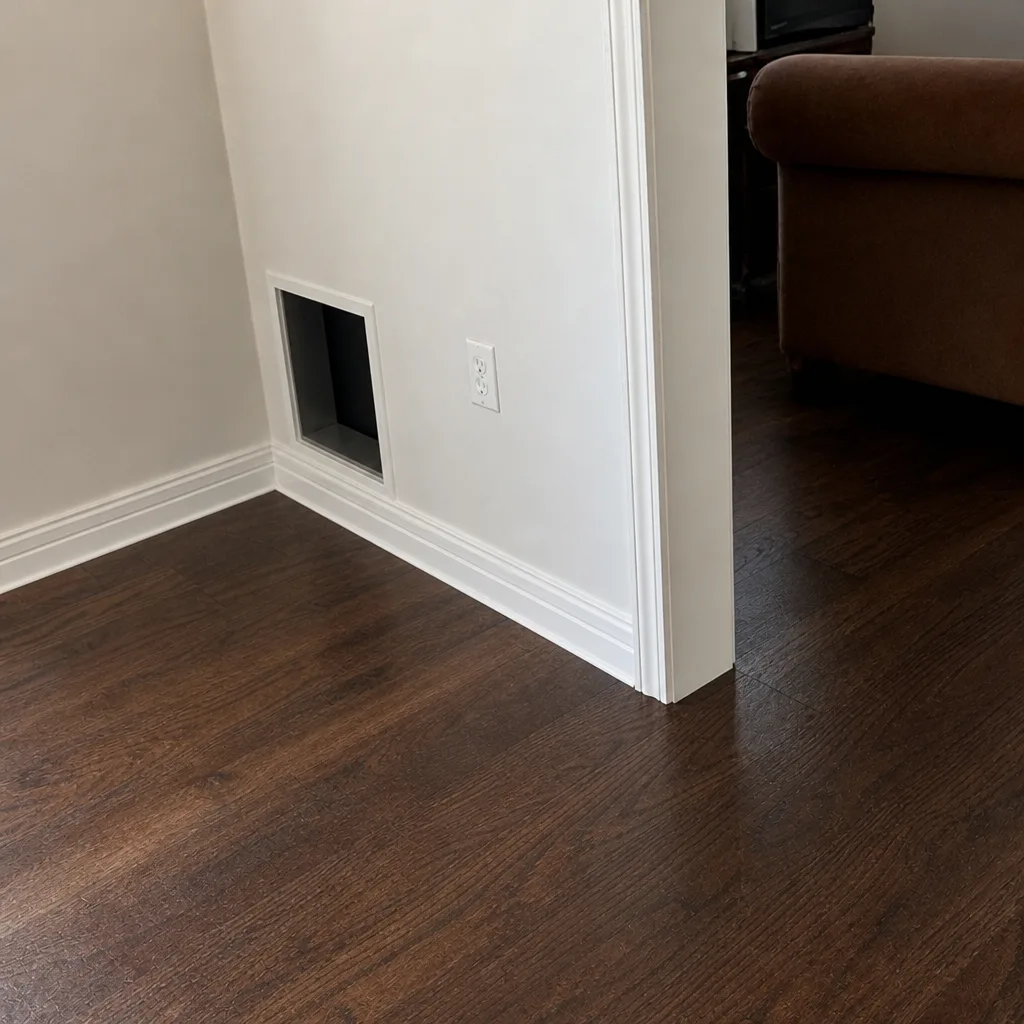
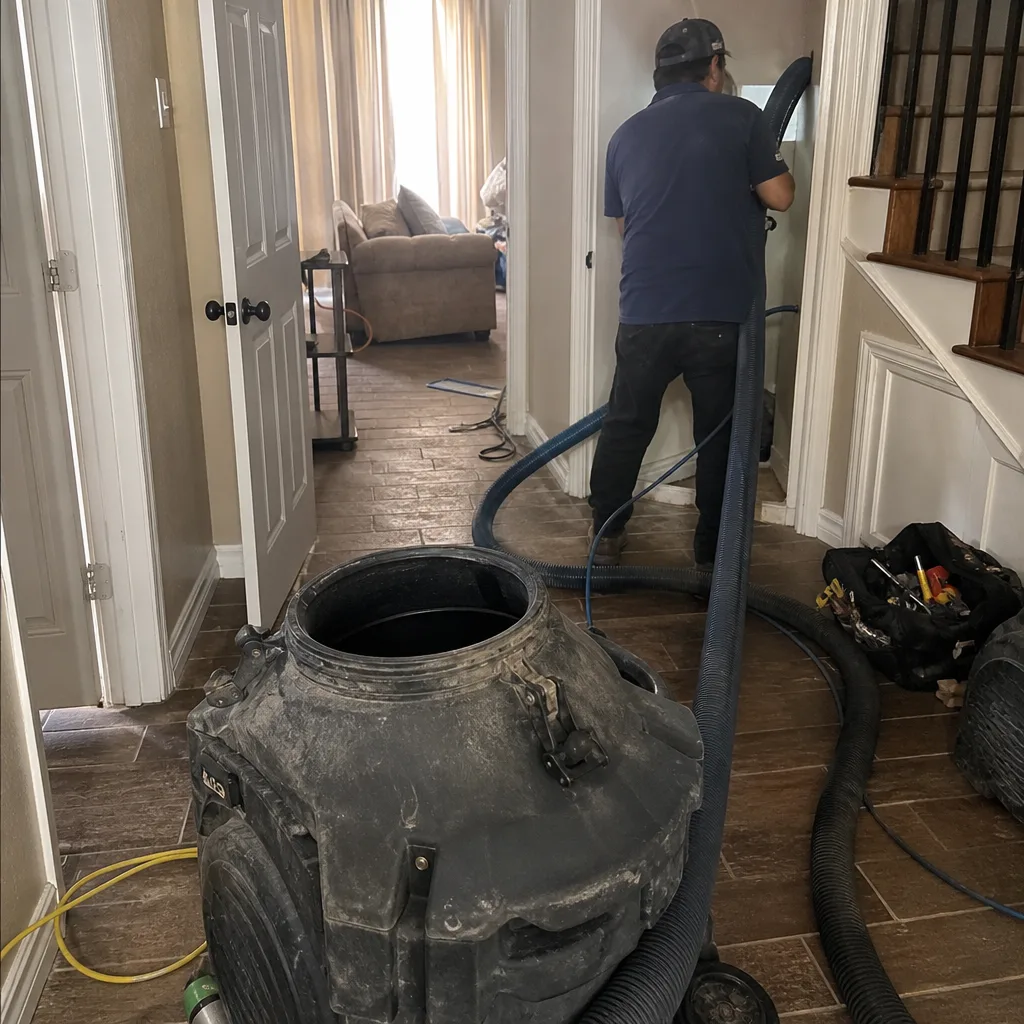
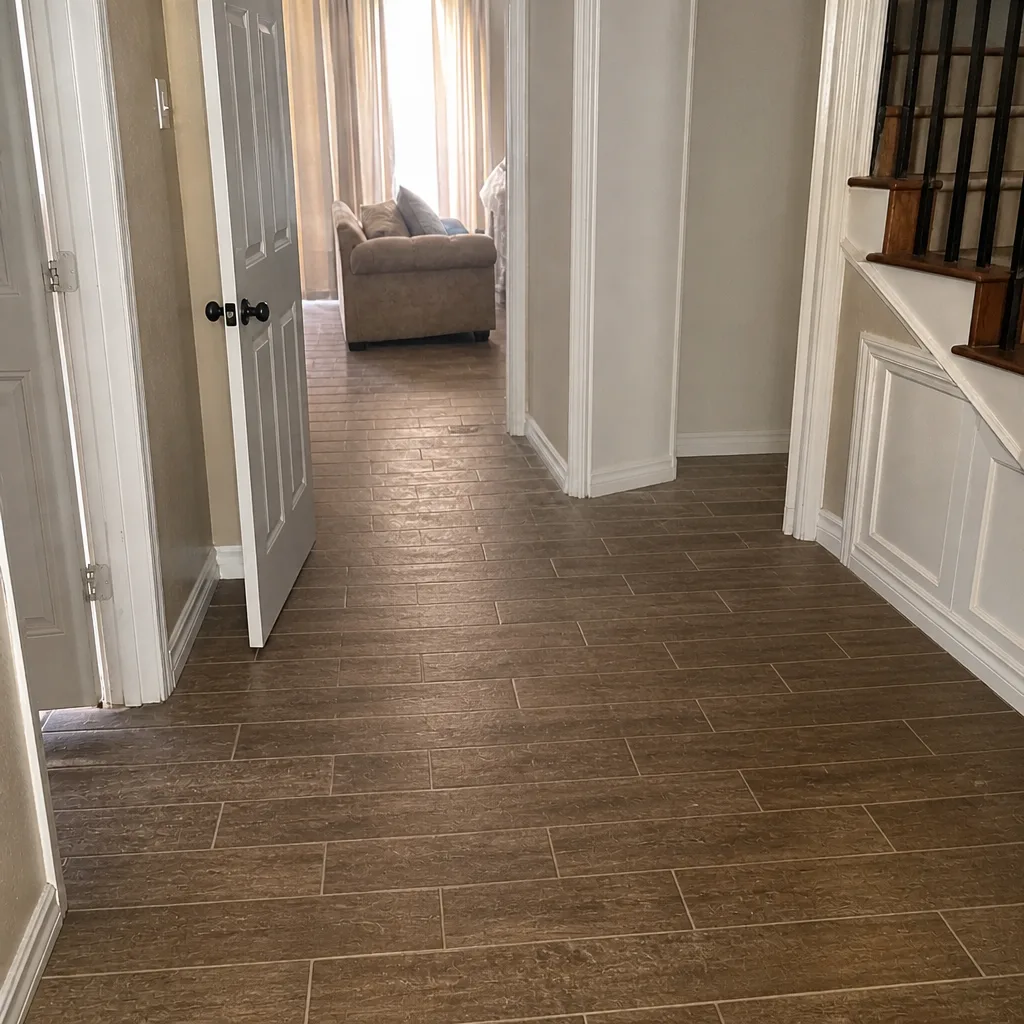
Whole-system duct and dryer vent check with before-and-after photos - you see exactly what came out of your vents
That "$99 whole-house special" is a bait ad - the real number appears once they are in your hallway, or the "clean" is a shop-vac at the register. We photograph the inside of your ducts before and after instead.
The Complete Guide to Air Duct Cleaning in Garland
Most homeowners in Garland believe they’ve had their ducts cleaned. What they often got was a technician with a shop vacuum and an air compressor who loosened dust from the duct walls and let it settle back into the living space. The job looked active. The ducts didn’t get cleaner. That distinction matters more than any coupon or advertised special, and it’s the reason we wrote this guide. Below you’ll learn the actual sequence of a compliant duct cleaning job, the equipment that makes it work, why North Texas soil accelerates the problem, and how to read the report afterward so you know exactly what happened in your home. If you’d rather just talk it through, Duct Cleaning Garland is the place to start.
Styles & brands we work with
- Whole-home duct cleaning
- Dryer vent cleaning
- Camera inspection
- Sanitizing & deodorizing
Quick Answer
A proper air duct cleaning in Garland means a contained, mechanically agitated, HEPA-extracted cleaning of the entire system, verified before and after with camera documentation. It requires negative-pressure containment, contact brush equipment like Rotobrush, and professional extraction like Nikro. Anything less moves dust around without removing it from your home.
Table of Contents
- What Air Duct Cleaning Actually Means
- Why Negative Pressure Is the Line Between Cleaning and Stirring
- The Full Job Sequence, Step by Step
- North Texas Soil and the Garland Duct Fouling Problem
- Brush Systems vs. Air Whips: What Each Leaves Behind
- How to Read a Post-Job Report
- What Air Duct Cleaning Costs in Garland
- Common Mistakes to Avoid
- When to Call a Professional
- Frequently Asked Questions
What Air Duct Cleaning Actually Means
Air duct cleaning is the mechanical removal of accumulated debris from the interior surfaces of your HVAC supply and return system, followed by extraction of that debris from the home. Not agitation alone. Not a vacuum nozzle waved at a floor register. Both parts of that definition matter, and skipping either one is where most Garland jobs fall short.
Most homeowners assume the inside of their ducts stays clean because the air filter catches everything. It doesn’t. Standard filters catch a fraction of what passes through the system, and the duct walls themselves collect the rest over time. Supply trunks, branch runs, return chases, plenum surfaces, the blower housing, and the evaporator coil face all collect material that has nothing to do with filter efficiency.
A genuine clean includes:
- Every supply and return run, not just the visible floor registers
- The main trunk lines and plenum surfaces
- The blower compartment where accessible
- The return air chase and filter housing
It also includes a clear plan for what happens to the loosened material. That’s where containment comes in, and it’s the topic of the next section. If you want a plain overview of the service itself, the air duct cleaning page walks through it. But the details below are what separate a job that matters from a job that doesn’t.
Why Negative Pressure Is the Line Between Cleaning and Stirring
Negative pressure means the duct system is held under constant suction while it’s being cleaned, so loosened dust and debris travel toward the extraction source instead of escaping into living space. In a standard Garland single-story or two-story home, a residential shop vacuum cannot generate that condition. It doesn’t have the airflow or the sealed connection points, and it doesn’t run long enough to maintain suction across the full system.
What containment actually requires:
- A sealed connection at the main trunk or plenum, not a hose taped to a floor register
- Continuous HEPA extraction running for the entire cleaning, not just at the end
- Covered or filtered supply openings so cross-contamination doesn’t leak into bedrooms
- Equipment sized for the duct volume, which for most Garland homes means a commercial extraction unit like Nikro or an Abatement Technologies air-containment system
When containment is missing, mechanically agitated dust has nowhere to go but into the room. You smell it. You see a haze. And the duct walls are exactly as loaded as they were before the technician arrived, because the loosened material settled back down within minutes.
We run Abatement Technologies equipment specifically to hold negative pressure from setup to breakdown. It’s not a marketing feature. It’s the difference between a job that pulls material out and one that redistributes it across your living room.
The Full Job Sequence, Step by Step
A properly run duct cleaning in Garland follows a repeatable sequence. The order matters, because skipping a step means the next one can’t work. This is what a real job looks like from arrival to departure.
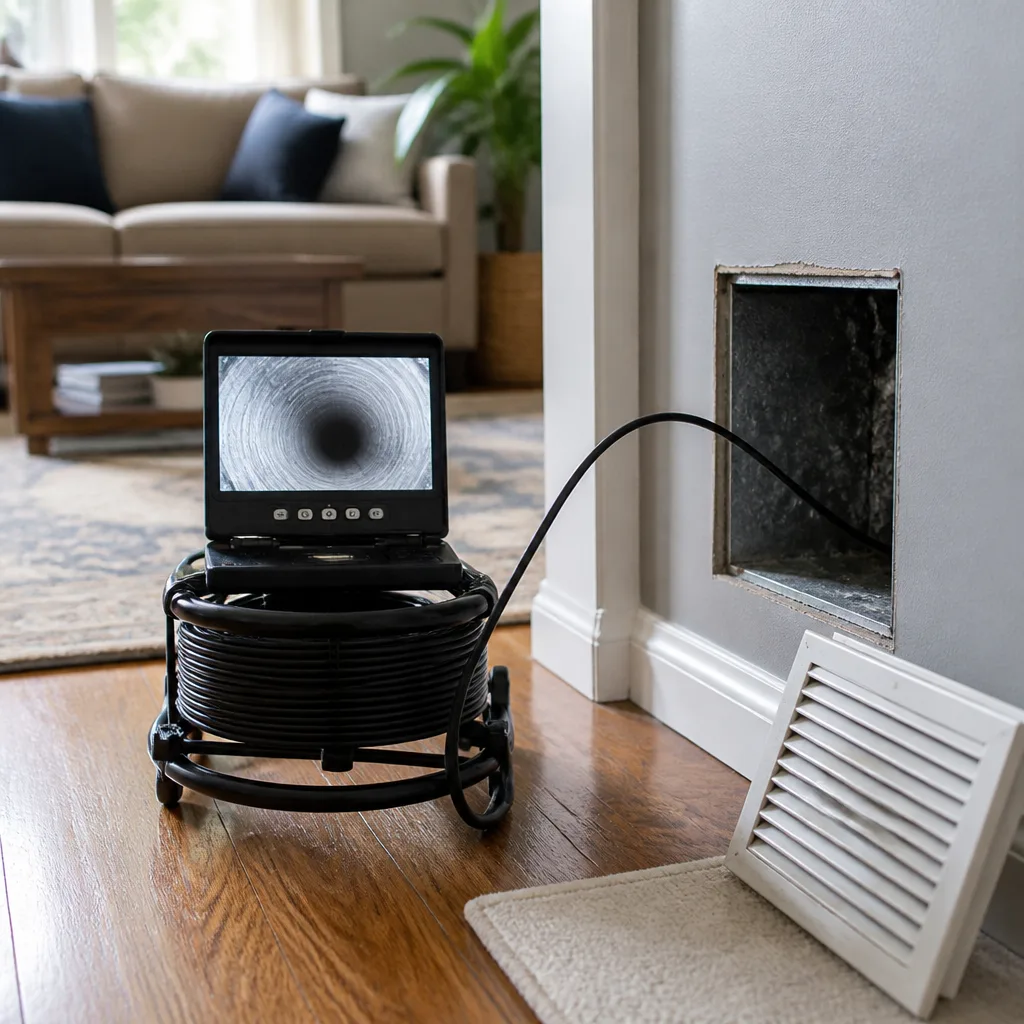
- Pre-inspection camera pass. Before any equipment runs, we put a camera into the supply and return system and document what’s actually there. Dust load, debris type, visible damage, disconnected sections, pest entry, moisture. That footage becomes the baseline for the before-and-after comparison you receive at the end.
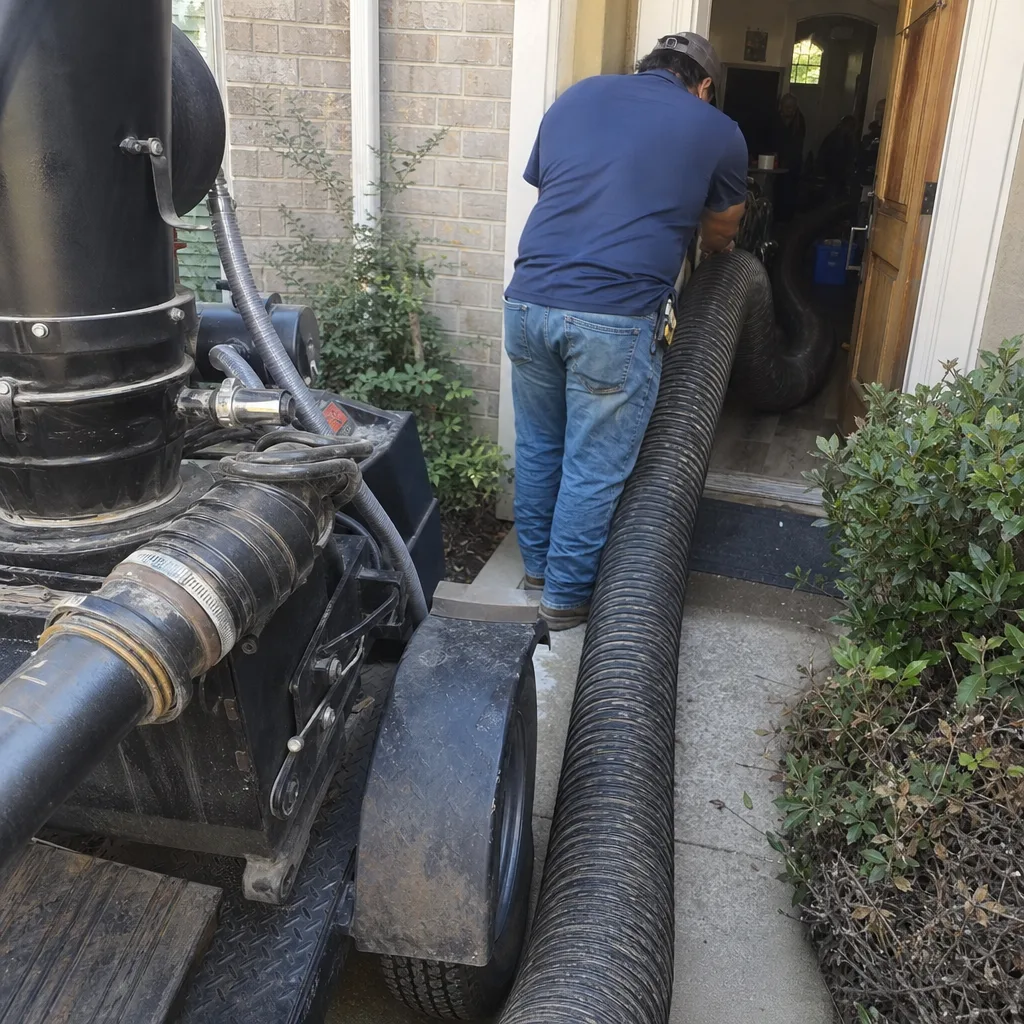
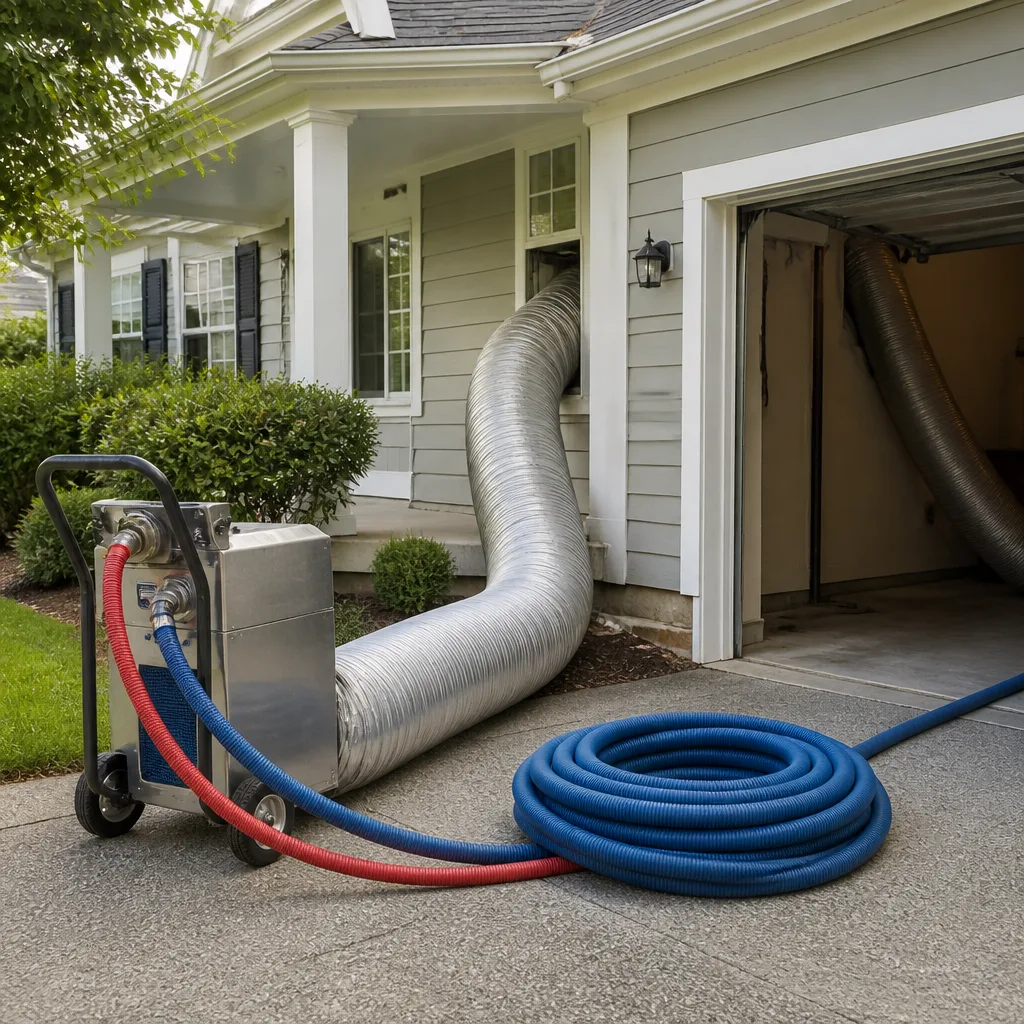
- Source containment setup. Openings that won’t be worked through get sealed. A negative-pressure source is connected at the main trunk or plenum. HEPA extraction runs from this point forward, and doesn’t stop until teardown.
- Mechanical agitation with contact equipment. Rotobrush brush heads run each branch and trunk, contacting the duct walls to break debris loose. Air-whip agitation can be used as a supplement, but not as a substitute. Contact cleaning is what actually scours the surface.
- HEPA extraction of loosened material. Every bit of debris the brushes release gets pulled through the extraction system and out of the home. This is where the Nikro equipment does its work, and it’s why the suction capacity matters more than the nozzle.
- Blower and coil face. If the blower compartment is accessible, it gets cleaned. The same goes for the evaporator coil face, which in North Texas often carries a mat of dust that no duct run alone will address.
- Post-job camera verification. Same camera, same duct sections, after cleaning. Side-by-side footage is what you should expect on the report, and it’s how you confirm the run was actually cleaned rather than just passed through.
- Documentation handoff. A written summary with photos, any findings that require repair, and the parts of the system that may need follow-up.
When the inspection turns up a breached flex run, a disconnected takeoff, or a crushed section behind drywall, we repair what we find. Cleaning a system with an open breach is a wasted job, because the moment the system runs, unfiltered attic or wall-cavity air moves straight into the supply stream. That’s why duct repair is a core service here, not an add-on pitch.
North Texas Soil and the Garland Duct Fouling Problem
Garland sits on the Blackland Prairie and its historic clay and caliche substrate, and that geology shows up inside your HVAC system whether you think about it or not. Caliche is a calcium carbonate hardpan that breaks down into a fine, alkaline dust. When it gets airborne, which it does every time the wind picks up or a nearby lot gets graded, it moves into return air intakes and settles on duct walls.
Two things make this worse than a typical dust load:
- The particle size. Caliche dust is fine enough to pass through standard filters and coarse enough to accumulate on duct surfaces rather than stay suspended. That means a filter swap doesn’t remove it once it’s in.
- The clay content. North Texas clay becomes sticky in humid conditions and cakes in dry ones. Dust that lands on a duct wall in this region doesn’t just sit there. It adheres, and once adhered, it takes mechanical contact to break loose. Air movement alone won’t do it.
For Garland homes this matters because the return system typically sees the heaviest loading. Filter housings accumulate a mat of this material, return chases collect it along the bottom edge, and supply runs pick up a lighter coating that still adds up over time. Homes near active construction, near major corridors, or with pets and heavy carpeting tend to accumulate faster. So do homes with long return chases that pull lengthwise across a cavity.
If your house was built in the middle of the last century, which describes a large share of Garland housing stock, the duct system may also include sections that were never properly sealed or that have degraded over decades. That combination of soil type and housing age is exactly why we treat every call as an inspection first and a cleaning second. The Garland page covers more of what we see across the area, but the short version is this: a Garland duct system doesn’t age the way a system in a wetter, cooler climate does.
Brush Systems vs. Air Whips: What Each Leaves Behind
Air-whip cleaning agitates debris with compressed air. Brush cleaning breaks it loose with mechanical contact against the duct wall. The distinction sounds small. The results are not.
Air whips work by pushing air from a nozzle in multiple directions. In a clean system with light load, they’re enough to lift loose dust. In a system with adhered debris, which is what Garland’s soil profile produces, they push material off one surface and onto another. The dust doesn’t leave the duct. It moves. Over time, an air-whip-only clean can actually pack dust tighter into the seams and corners where the nozzle’s blast pattern doesn’t reach.
Brush systems like Rotobrush use rotating brush heads sized for the duct run. The brush physically contacts the duct wall, scuffs material loose, and the extraction behind it pulls the released debris out of the system. On flex duct, the brush is sized to avoid damaging the inner liner. On rigid metal trunk, it works the full circumference.
What brush cleaning leaves behind: bare duct surface with the residue pulled into extraction.
What air-whip-only cleaning typically leaves behind: redistributed dust, some of it now packed into corners and seams, some of it re-aerosolized into the home.
If a technician shows up and never asks about the duct material or run diameters before choosing the tool, that’s worth noting. There’s no one-size brush for a system with mixed flex and rigid runs, which is what most Garland homes have after fifty or sixty years of retrofits and additions.
How to Read a Post-Job Report
Documentation is where the job becomes verifiable. Without it, you’re relying on the technician’s word. A proper post-job report includes a handful of specific elements, and knowing what to look for lets you tell a thorough job from a thin one.
What a compliant report should include:
- Before and after camera footage from the same duct sections, labeled by run
- Photos of the return chase, plenum, and blower compartment
- A written list of every run that was cleaned
- Any findings that need repair, with photos of the breach or damage
- Confirmation of the equipment used, so you know what actually ran in the system
If the report contains a single “after” photo of one clean-looking floor register with no reference to the before condition, that’s not documentation. If it contains a written statement that the system was cleaned with no images, that’s not documentation either. Before-and-after photos come in pairs, from the same camera, in the same location, and there should be at least one for every major run.
We photograph every before-and-after pair on every job. It’s how we show the work, and it’s how you confirm the work was done. If a provider can’t produce that for you, the report is a receipt, not evidence.
What Air Duct Cleaning Costs in Garland
Pricing for air duct cleaning in Garland varies by system size, number of runs, level of accumulation, and whether repair is needed. The ranges below reflect typical whole-system pricing for a standard single-family home in this area. They are estimates, and the final number is set by the written estimate after an on-site look at the system.
- Standard whole-system clean, single-story: $350 to $550 for a typical 1,500 to 2,200 square foot home with 10 to 14 supply runs
- Standard whole-system clean, two-story: $450 to $700 for larger systems with more runs and one or more return chases
- Heavy accumulation add-on: $75 to $175 where the return chase or plenum requires extended extraction time
- Duct repair, per breach: $125 to $400 depending on accessibility and whether the run is in the attic or a wall cavity
- Dryer vent cleaning: $100 to $175 for a standard exterior-vent run
We quote one flat price per system after inspection. No per-vent pricing. No coupon that becomes a larger invoice on-site. If a breach or a disconnected run turns up during the inspection, we price the repair before we start the clean, so you’re deciding on a full number rather than a surprise addition.
If you’ve received quotes that come in far below these ranges, that’s the first warning sign. A job that doesn’t include containment, contact equipment, and post-job documentation can be priced lower because it doesn’t include any of those steps. For related pricing context, the dryer vent cleaning page covers that service in similar detail.
Common Mistakes to Avoid
- Accepting a per-vent price with a coupon as the final number. A low advertised figure that expands during the visit is the industry’s most common pattern. Ask for a flat system price before any work begins.
- Allowing a job without a pre-inspection camera pass. If no one has looked inside the ducts before quoting the work, there’s no way to know the actual condition of the system. That’s a shot in the dark dressed as a service.
- Hiring a shop-vac operator. A consumer or shop-grade vacuum cannot hold negative pressure across a whole Garland duct system. If the equipment isn’t commercial extraction, the dust isn’t leaving.
- Skipping repair on a disconnected run. Cleaning a system with an open breach behind a takeoff or in the attic is wasted effort, because attic air and insulation particles re-enter the supply stream immediately.
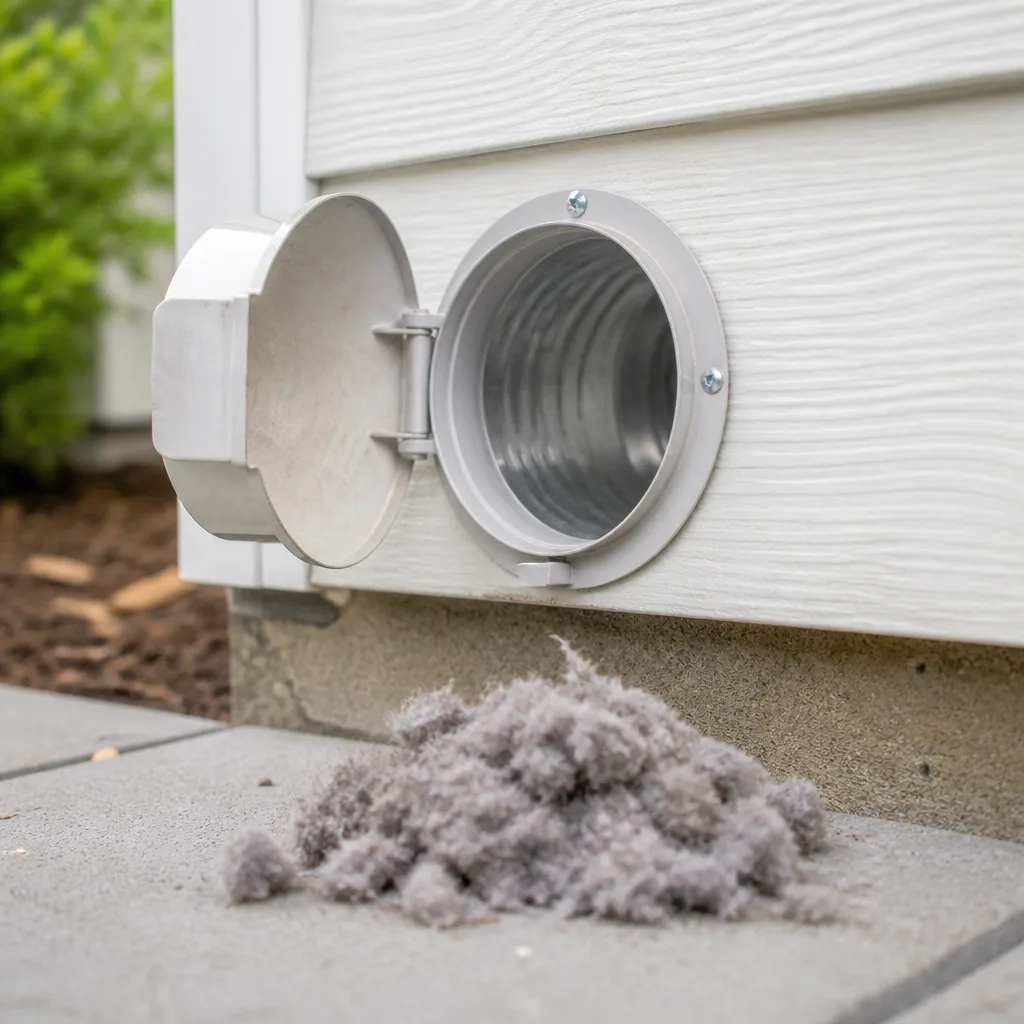
- Booking a dryer vent clean as a convenience add-on. Dryer vent cleaning is a fire-safety service. Lint accumulation in the exhaust run is one of the leading causes of residential structure fires, and it doesn’t resolve without mechanical removal.
- Assuming a filter change replaces cleaning. Changing filters on schedule is good practice, but it doesn’t remove what’s already adhered to the duct walls. The two tasks address different problems.
- Accepting an “after” photo of one register as documentation. The report should show before-and-after camera footage of every major run, not a decorative shot of a clean grille.
When to Call a Professional
Call a professional when the symptoms point to something in the ducts rather than something in the air filter. Recurring musty odors that return within a day of a filter change, a dryer that needs two cycles to dry a normal load, visible dust at the supply registers within hours of a clean, or a home inspection report flagging the duct system are all signs worth investigating. Allergy symptoms that worsen when the system runs, a recent remodel that produced fine dust, or a system that’s never been cleaned in a home you’ve lived in for years, all point to the same thing: it’s time for an inspection.
If you’re in Garland, Duct Cleaning Garland offers free estimates in Garland. Call (888) 430-9938. We answer 24/7. Fast dispatch from 7am to 7pm, Sunday through Friday.
Frequently Asked Questions
A whole-system air duct cleaning in Garland typically runs $350 to $550 for a single-story home and $450 to $700 for a two-story, depending on run count and accumulation. The final price is set by the written estimate after inspection. Call (888) 430-9938 for an exact quote. Estimates are free.
Lower quotes usually skip containment, skip contact brush equipment, and skip post-job documentation, which means they’re not actually charging for the parts that make the job work. A shop vacuum and an air whip can be offered at a low price because nothing else is being brought to the job. Call (888) 430-9938 for a quote that breaks down what’s included.
You know it was done when you receive before-and-after camera footage of every major duct run, labeled and dated, plus photos of the return chase and blower compartment. Anything less isn’t verification. We photograph every job in pairs, and you get those images. Call (888) 430-9938 to book.
Every three to five years is a reasonable baseline for most Garland homes, and more often in homes with pets, recent remodeling, active construction nearby, or a heavy caliche dust load. There’s no universal schedule. The condition of the duct walls should drive the timing, not a calendar. Call (888) 430-9938 if you’re not sure where your system stands.
Air-whip cleaning agitates dust with compressed air, which pushes some of it loose but often leaves it redistributed in seams and corners. Rotobrush uses mechanical contact against the duct wall, which scuffs adhered debris loose so HEPA extraction can pull it out. In Garland’s soil profile, contact cleaning is the only method that reliably removes the load. Call (888) 430-9938 to discuss which method suits your system.
It often does, when the source of the odor or irritation is material adhered to the duct walls, and when that material is actually removed rather than stirred. If odors return within a day of the clean, the cause may be elsewhere in the system (drain pan, coil, or a disconnected run). A pre-inspection camera pass is how you tell the difference. Call (888) 430-9938 to schedule one.
Yes. Repair is quoted during the inspection, before the clean starts, and completed in the same appointment when possible. Cleaning a system with an open breach wastes the clean, so both tasks need to happen together. Call (888) 430-9938 to book an estimate.
Ask about the negative-pressure source, the brush equipment, and the extraction unit. The answer should name real professional systems rather than a generic “high-powered vacuum.” We run Rotobrush brush equipment, Nikro extraction, and Abatement Technologies containment on every appropriate job, and we’re happy to walk you through each one. Call (888) 430-9938 with questions.
The Bottom Line
The gap between a real duct cleaning and a wasted one isn’t the price or the coupon. It’s the equipment, the sequence, and the documentation. Contained negative pressure pulls the loosened debris out. Contact brush equipment scuffs it off the wall. HEPA extraction carries it away. And a camera pass at the start and finish is what proves the job happened. In Garland, with caliche dust and clay-heavy soil working against you, contact cleaning isn’t optional. If a provider can’t name the equipment and can’t show you before-and-after footage, keep looking. If you’d rather just get it done right, call (888) 430-9938 for a free estimate. We answer 24/7. Fast dispatch from 7am to 7pm, Sunday through Friday.
Written by the team at Duct Cleaning Garland.
See the difference
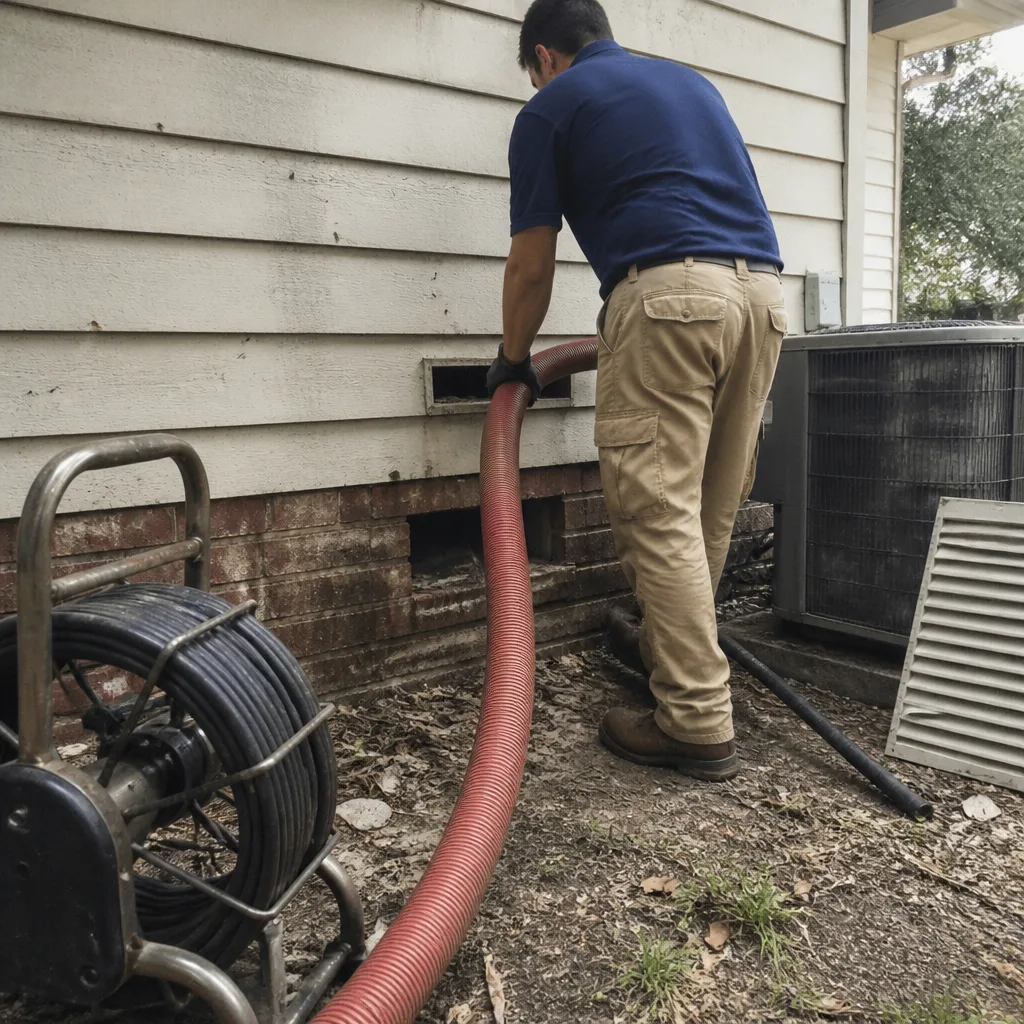 Before
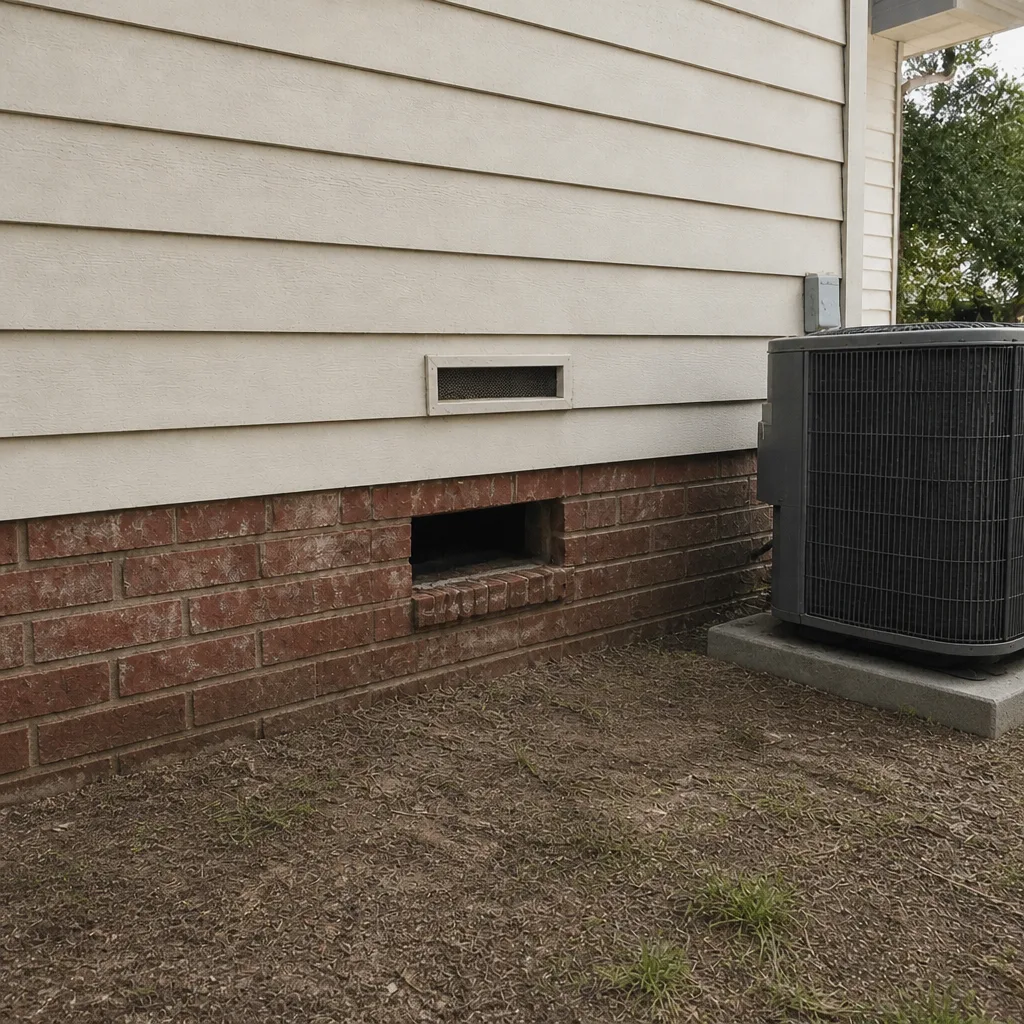 After
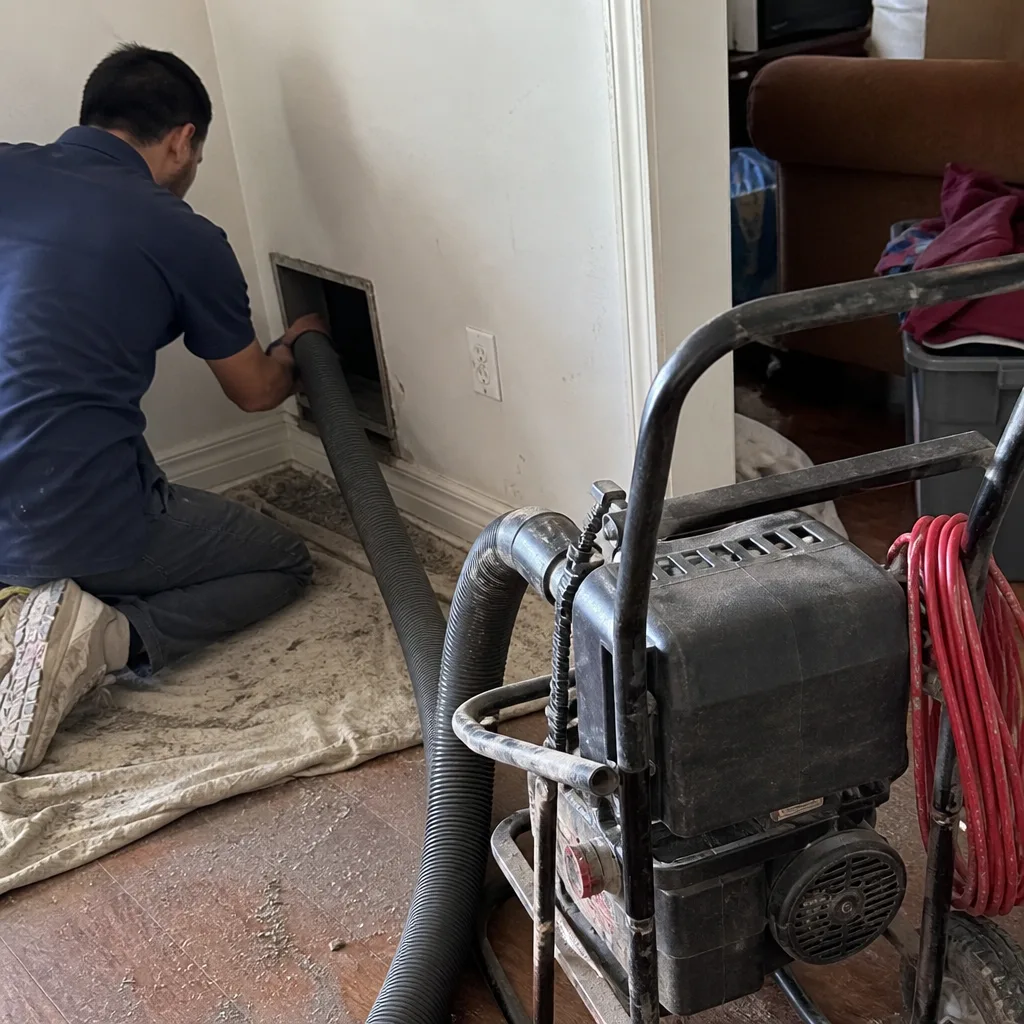 Before
 After
 Before
 After